
Jewelry Pricing and Markup FAQ: Price for Profit
Jewelry Pricing and Markup FAQ
Pricing is where new jewelry sellers either build a real business or quietly lose money. Wholesale cost is not what matters, landed cost is. A piece you buy for $3 and sell for $12 may feel like a win, until you subtract shipping, payment fees, packaging, returns and ad spend. This FAQ covers the standard markup formulas, how to think about wholesale to retail, and how to price without racing to the bottom on price.
Start from landed cost, not wholesale cost
The first mistake is pricing off the number on the supplier invoice. Your true cost is everything it took to get the piece to you and ready to sell. That means wholesale unit price plus inbound shipping split per unit, packaging, payment processing (around 3 percent), and your average return rate. If a $4 bracelet costs $1.50 all-in by the time it ships to a customer, that is your real baseline, not $4. Pricing off the invoice makes every margin math wrong.
The standard markup formulas
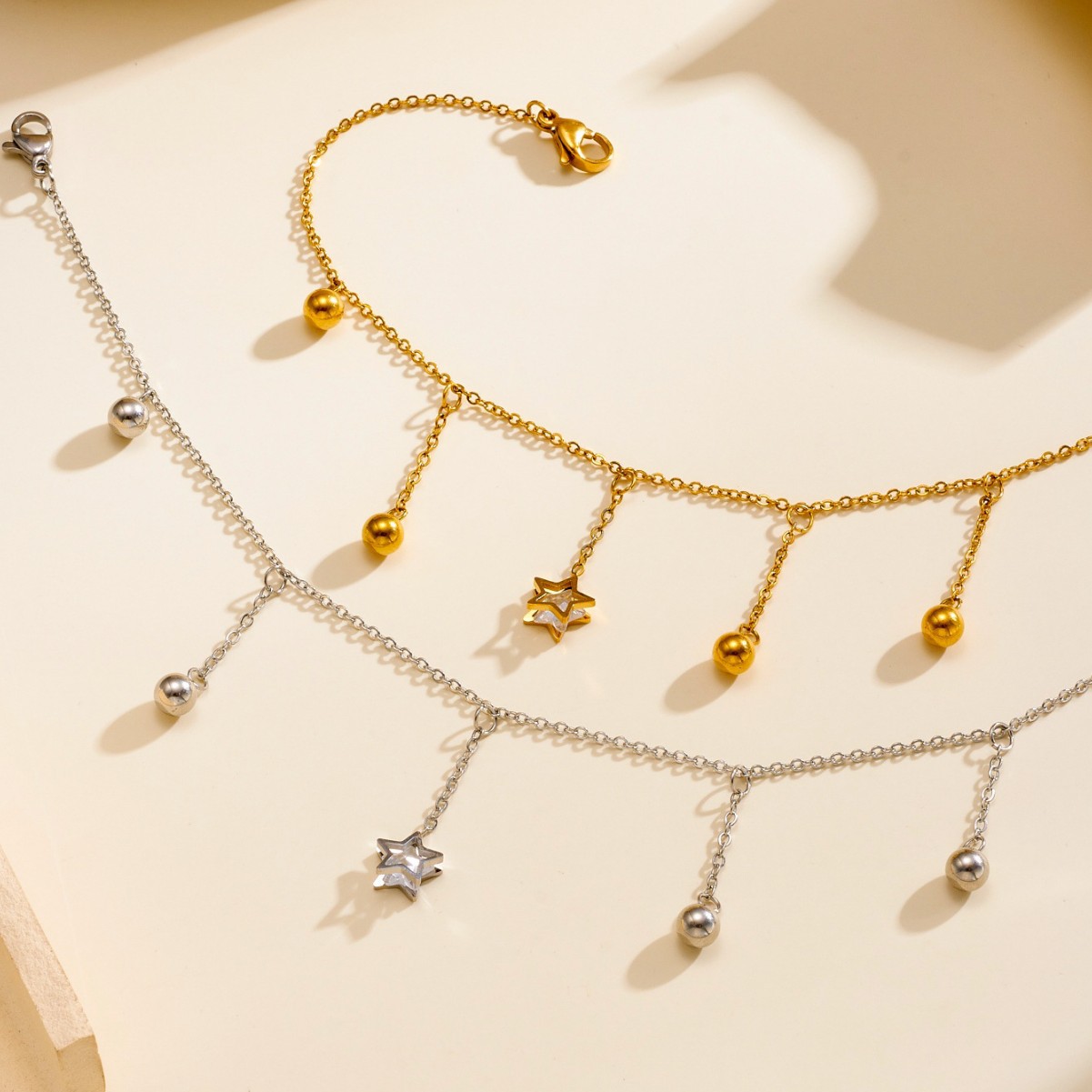
Fashion jewelry commonly uses a keystone markup, which means doubling, or more. The classic retail rule is wholesale cost times 2 to 3 for everyday fashion, and 3 to 4 for brands with strong identity. Online sellers often land around a 2.5 to 3.5 multiplier once they factor in marketing. The exact number matters less than being consistent and leaving room for discounts, ads and returns.
| Item | Landed cost | Keystone x2 | Brand x3 |
|---|---|---|---|
| Stud earrings | $3.50 | $7.00 | $10.50 |
| Pendant necklace | $5.00 | $10.00 | $15.00 |
| Chain bracelet | $4.50 | $9.00 | $13.50 |
| Band ring | $3.00 | $6.00 | $9.00 |
Tier your prices, do not set one flat number
Smart stores use a price ladder. Entry pieces under $20 get people to buy the first time and cover shipping. Mid pieces at $25 to $45 are your profit core. Higher pieces at $50 to $100 anchor the range and make the mid tier look reasonable. If everything in your store is $12, customers see a cheap shop. A $60 piece next to a $20 one lifts perceived value across the whole catalog.
Discounting without killing margin
Sales are necessary, but training customers to wait for 40 percent off is a slow way to die. The trick is to discount bundles and slow stock, never your hero pieces. Bundle two items for $X, offer free shipping at a threshold, and give a small first-order coupon instead of slashing prices sitewide. End-of-season clearance is expected. Permanent markdowns are not. Keep your hero pieces at full price through the season.
Pricing sanity check
If your average order value is $25 and your landed cost plus ads is $12, you are making about $13 gross before overhead. Is that enough to cover your time, rent or software? If not, raise prices or raise order value, not volume.Frequently asked questions
What is a good markup for stainless steel jewelry?
A 2.5 to 3.5 times markup on landed cost is typical for online fashion jewelry. Simple everyday pieces at 2 to 2.5, branded or packaging-improved pieces at 3 to 4. Stainless steel already has a low wholesale cost, which leaves plenty of room for a healthy retail price.
How do I calculate my true landed cost?
Add unit wholesale price, inbound freight per unit, packaging, payment fees (about 3 percent), and estimated return cost per order. That number is the floor. Never price below it, even on sale.
Should I match my competitor's price?
No, unless you sell the exact identical generic product. If your photos, packaging and service differ, you can price higher. Price matching on commodity pieces is a race to zero. Differentiate on the things customers actually feel.
How much profit margin should I target?
Gross margins of 50 to 70 percent are common for fashion jewelry retail. After ads, packaging and returns, a net margin of 15 to 25 percent is a healthy small brand. If you are below 10 percent net, your pricing or costs need work.
How does free shipping affect pricing?
Either bake shipping into the price or set a free-shipping threshold. Absorbing shipping on a $10 item quietly destroys margin. A $35 free-shipping threshold raises order value and covers the cost naturally.
What is a good first-order discount?
10 percent off or 15 percent over a minimum is enough to convert a first buyer without training them to expect big discounts. Avoid 40 percent off sitewide as your opening move.
Should prices end in .95 or whole numbers?
Charm pricing ($19 instead of $20) still nudges perception, but premium brands often use clean numbers. Test both. The bigger lever is your price ladder and perceived value, not the cents.
How often should I raise prices?
Raise prices gradually as your brand and reviews build, especially on best sellers that sell out. Raising price by a few dollars on a proven winner almost never drops volume, and it directly improves margin.
Bottom line
Price from your real landed cost, build a price ladder, and protect your hero pieces from endless discounting. The goal is not the cheapest store, it is a store where every order leaves you with enough margin to keep going.
- Company Info
- Feedback
- Customer Reviews
- About Us
- Dropshipping
- FAQ
- Jewelry Wholesale Blog
- User Center
- Forget Password
- My Orders
- Tracking Order
- My Account
- Register
- Payment & Shipping
- Terms And Conditions
- Return Policy
- Shipping Methods
- Payment Methods
- Discount