Jewelry Quality Control FAQ
Batch Consistency, Plating Standards, Defect Rates, and Supplier Accountability
Why Quality Control Is Your Most Important Supplier Standard
Nothing kills a jewelry business faster than inconsistent quality. A customer who receives a perfect necklace one month and a defective one the next month won't buy again. They'll leave a bad review, tell their friends, and shop elsewhere. In the jewelry business, your reputation is built one piece at a time, and one bad batch can erase months of good work.
In 2026, wholesale buyers are paying more attention to quality standards than ever before. Industry surveys show that delivery on-time rate (target: 95% or higher), sample-to-bulk consistency (target: color difference Delta E of 1.5 or less), and after-sales response time (target: 24 hours or less) have become the three most important factors in supplier selection, ahead of price. Buyers have learned the hard way that the cheapest supplier often costs the most in returns, refunds, and lost customers.
This guide answers the quality control questions every jewelry buyer should ask before placing an order, and explains what to look for, what to test, and how to hold your supplier accountable. These are the standards that separate reliable suppliers from ones that will cost you money.
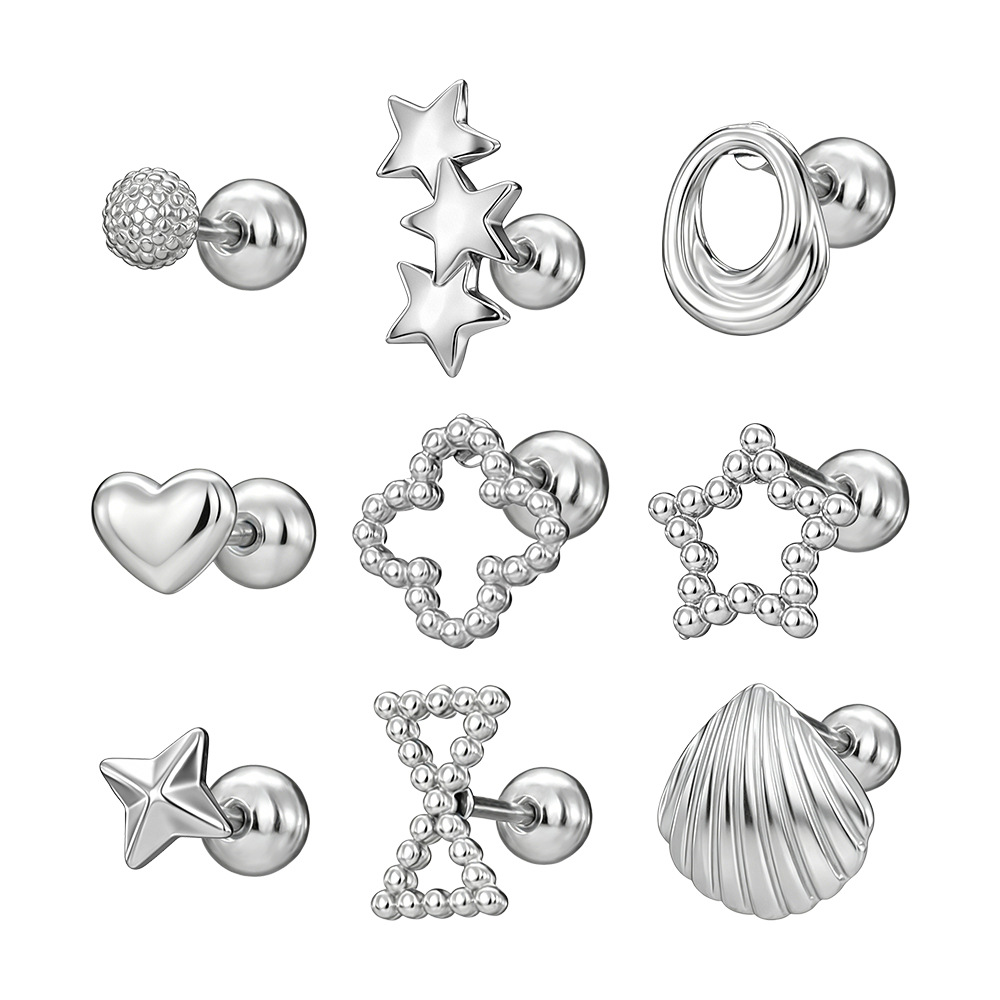
The quality rule that protects your business: Never approve a bulk order without first approving a sample. The sample becomes your quality benchmark. Every piece in the bulk order should match the sample in material, color, size, weight, and finish. If the bulk order doesn't match the sample, you have grounds to reject it or request a remake. A supplier who won't provide samples before bulk production is not a supplier you should trust.
Sample and Batch Consistency Questions
How do I make sure bulk orders match the sample quality?
This is the single most important quality control question in jewelry wholesale. Here's the process that works. First, always order a sample before placing a bulk order. Inspect it thoroughly and keep it as your reference standard. Second, when the bulk order arrives, compare 5 to 10 random pieces against the sample side by side under bright light. Check: color match (gold tone should be identical), size and dimensions, weight, plating thickness and uniformity, stone setting quality, clasp function, and overall finish. Third, use a color difference chart or Delta E meter if you have one. The industry standard for acceptable color variation is Delta E 1.5 or less; anything above 3 is visibly different to the naked eye. Fourth, if you find inconsistencies, document them with photos and contact your supplier immediately. A good supplier will replace defective pieces or issue a credit. At Showfay, our sample-to-bulk color consistency is Delta E 1.0 or less, well within industry standards, and we replace any piece that doesn't match the approved sample.
What is an acceptable defect rate for stainless steel jewelry?
For quality stainless steel jewelry from a reputable factory, the acceptable defect rate is 1% or less. That means in an order of 100 pieces, no more than 1 piece should have a defect. Defects include: scratches, dents, plating issues, broken clasps, loose stones, sharp edges, missing components, and size deviations beyond tolerance. If your defect rate is consistently above 2%, you have a supplier quality problem and should address it or find a new supplier. When you receive an order, inspect at least 10% of the pieces (minimum 5 pieces) from different parts of the shipment. If you find defects in the sample, inspect more pieces. Document all defects with photos and count the percentage. A defect rate of 3 to 5% might seem small, but if you're selling 500 pieces per month, that's 15 to 25 defective pieces reaching customers, which translates to returns, bad reviews, and lost business. Quality matters at every volume.
How do I check PVD plating quality on a bulk order?
PVD plating quality is one of the most common sources of customer complaints in stainless steel jewelry. Here's how to inspect it. First, visual inspection under bright light: the color should be uniform across the entire piece, with no dark spots, streaks, or thin areas. Pay special attention to edges, curves, and high-contact areas where plating is often thinner. Second, adhesion test: use a piece of clear tape, press it firmly onto the plated surface, then peel it off quickly. If plating comes off on the tape, the adhesion is poor. Third, scratch test gently: use a soft cloth or your fingernail to rub the surface. Quality PVD won't show marks. Fourth, thickness check: ask your supplier for plating thickness specifications. Quality PVD gold plating should be 0.5 to 1 micron. Fifth, wear test: keep one piece from each batch and wear it daily for 2 to 4 weeks. If it fades or chips in that time, the plating quality is poor. At Showfay, our PVD plating is 0.8 micron and passes all standard adhesion and wear tests.
What tolerances should I expect for jewelry dimensions and weight?
Jewelry manufacturing has standard tolerances that buyers should understand. For dimensions (length, width, diameter), the tolerance is typically plus or minus 0.5mm for small pieces (rings, earrings) and plus or minus 1mm for larger pieces (necklaces, bracelets). A necklace listed as 20 inches might be 19.8 to 20.2 inches, which is normal. For weight, the tolerance is plus or minus 5% of the stated weight. A ring listed as 5 grams might be 4.75 to 5.25 grams. For stone sizes, tolerance is plus or minus 0.2mm. These tolerances exist because jewelry is manufactured, not machined to aerospace precision. What's not acceptable is: a ring listed as size 9 arriving as size 7, a necklace listed as 20 inches arriving as 18 inches, or a piece weighing 30% less than stated. Those are manufacturing errors, not normal tolerances. Always check dimensions and weight on sample pieces, and if bulk pieces fall outside these tolerances, raise it with your supplier.
| Quality Metric | Industry Standard | Showfay Standard | How to Check |
|---|
| Defect rate | 1% or less | 0.5% or less | Inspect 10% of shipment |
| Color consistency (Delta E) | 1.5 or less | 1.0 or less | Compare to sample under light |
| PVD plating thickness | 0.5-1.0 micron | 0.8 micron | Ask supplier spec, wear test |
| Dimension tolerance | +/- 0.5 to 1mm | +/- 0.5mm | Calipers or ruler |
| Weight tolerance | +/- 5% | +/- 3% | Digital scale |
| On-time delivery | 95% or higher | 98% or higher | Track order to delivery |
| Clasp function | 100% functional | 100% functional | Open/close 5 times each |
Material and Compliance Questions
How do I verify the material is really 316L stainless steel?
Material verification is critical because some suppliers label cheaper steel as 316L to save costs. Here are the methods, from simplest to most reliable. First, ask for a material certificate (also called a mill certificate or MTC). This document comes from the steel mill and shows the chemical composition of the specific batch of steel used. 316L should show: chromium 16-18%, nickel 10-14%, molybdenum 2-3%, carbon 0.03% or less. Second, use a stainless steel testing solution. Apply a drop to the metal; the color reaction indicates the nickel content. 316L has higher nickel than 304 or 201, so the color differs. These kits cost $10 to $20 online. Third, use a magnet. 316L stainless steel is generally non-magnetic or only slightly magnetic. If a piece is strongly magnetic, it might be a lower grade or have a ferritic structure. Fourth, for large orders ($5,000+), send a sample to a lab for spectrometric analysis. This costs $50 to $100 and gives definitive results. At Showfay, we provide material certificates for every batch and welcome third-party testing.
What compliance certifications do I need for selling jewelry?
The required certifications depend on where you're selling. For the United States: Prop 65 compliance for California (requires warning labels for products containing certain chemicals, though 316L stainless steel is generally exempt), and FTC guidelines for metal content disclosure. For the European Union: REACH compliance (restricts nickel release to 0.5 micrograms per square centimeter per week for earrings and 0.88 for other skin-contact items), and the General Product Safety Regulation. For the UK: UKCA marking and similar nickel restrictions. For Australia and New Zealand: mandatory consumer product safety standards. For Amazon and other marketplaces: they may require additional documentation, especially for the jewelry category. The good news is that quality 316L stainless steel from reputable suppliers typically meets all these standards because the nickel is tightly bound in the alloy and doesn't leach. Always ask your supplier for compliance documentation. At Showfay, our 316L stainless steel jewelry meets REACH, RoHS, and Prop 65 standards, and we can provide test reports on request.
What's the difference between PVD plating and regular gold plating?
This is one of the most important distinctions in stainless steel jewelry. Regular gold plating (electroplating) deposits a thin layer of gold onto the surface using an electric current. It's cheap but wears off quickly, typically in 1 to 6 months with daily wear. PVD (Physical Vapor Deposition) plating is a completely different process. The jewelry is placed in a vacuum chamber, and gold particles are vaporized and deposited onto the surface at high temperature, creating a molecular bond with the steel. PVD plating is 5 to 10 times harder than electroplating, more scratch-resistant, and can last 2 to 5 years with daily wear. PVD is also more environmentally friendly because it uses fewer chemicals. For stainless steel jewelry, always specify PVD plating, not electroplating. The cost difference is minimal (about 10-15% more per piece), but the quality difference is enormous. If a supplier can't tell you whether they use PVD or electroplating, assume it's electroplating and look elsewhere. All Showfay gold-tone and black-tone jewelry uses PVD plating.
Supplier Accountability Questions
What should I do if I receive a defective batch?
Act quickly and document everything. Here's the step-by-step process. First, stop selling the affected items immediately. Don't ship defective products to customers. Second, inspect the entire batch and count the number of defective pieces. Calculate the defect rate. Third, take clear photos of the defects from multiple angles, with a reference object for scale. Fourth, contact your supplier within 48 hours of receiving the order. Be specific: order number, item codes, number of defects, defect type, and photos. Fifth, request a resolution: replacement of defective pieces on your next order, a refund or credit for the defective items, or in severe cases, return of the entire batch for replacement. A reputable supplier will respond within 24 hours and offer a fair solution. If a supplier ignores you, blames you, or refuses to address the issue, that's a clear signal to find a new supplier. Keep records of all quality issues. If you have repeated problems with the same supplier, even if they fix each one, the inconsistency will hurt your business. At Showfay, we respond to quality issues within 12 hours and replace defective pieces without argument.
Should I use third-party inspection for large orders?
For orders over $2,000 or for custom/private label orders, yes, third-party inspection is worth the cost. A pre-shipment inspection costs $150 to $300 and can save you thousands in defective merchandise. The inspector visits the factory, pulls a random sample (usually 10-20% of the order), and checks it against your approved sample and specifications. They verify: material, dimensions, weight, plating quality, workmanship, packaging, and labeling. If the inspection fails, the factory fixes the issues before shipping, which is much cheaper than receiving defective goods and trying to return them. Companies like SGS, Bureau Veritas, and Intertek offer these services, as do many smaller inspection agencies in China. For orders under $2,000, the inspection cost might be too high relative to the order value. In that case, do your own thorough inspection on arrival and maintain a good relationship with a supplier you trust. For custom orders with mold fees, always get a pre-production sample approved before bulk production starts.
How do I build a quality-focused relationship with my supplier?
A good supplier relationship is built on clear expectations and consistent communication. Here's what works. First, specify your quality requirements in writing on every purchase order. Include: material grade, plating type and thickness, dimension tolerances, packaging requirements, and your acceptable defect rate. Second, always approve a pre-production sample before bulk orders, especially for new styles or custom pieces. Third, provide feedback after every order: tell the supplier what was good and what needs improvement. Suppliers can't fix problems they don't know about. Fourth, be a good customer: pay on time, place consistent orders, and communicate clearly. Suppliers prioritize buyers who are reliable and easy to work with. Fifth, visit the factory if possible, or schedule a video call to meet the production team. A personal relationship goes a long way in getting priority treatment and better quality. Sixth, don't constantly switch suppliers for small price differences. A long-term relationship with one reliable supplier is worth more than saving 5% on a single order. At Showfay, we assign a dedicated account manager to every wholesale customer.
- Always sample first: Approve a sample before every bulk order. It's your quality benchmark.
- Acceptable defect rate: 1% or less. Above 2% means supplier quality problem.
- Inspect 10% on arrival: Check color, size, weight, plating, clasps, stones against sample.
- PVD not electroplating: PVD lasts 2-5 years, electroplating lasts 1-6 months. Always specify PVD.
- Material verification: Ask for mill certificates. Use test solution. Lab test for large orders.
- Compliance: REACH (EU), Prop 65 (CA), RoHS. 316L typically meets all.
- Third-party inspection: For orders over $2,000 or custom orders. $150-$300 well spent.
- Document defects: Photos within 48 hours. Reputable suppliers replace or credit.
Final Quality Advice
Quality control isn't something you do once; it's a habit. Every order should be inspected. Every new supplier should be tested with a small order first. Every new style should be sampled before bulk production. The buyers who skip these steps are the ones who end up with customer complaints, bad reviews, and wasted money.
The good news is that quality stainless steel jewelry from a reliable factory is remarkably consistent. 316L is a forgiving material, PVD plating is durable, and modern manufacturing processes produce uniform results. Most quality problems come from suppliers cutting corners, not from inherent limitations of the material.
Choose your supplier carefully, set clear expectations, inspect every order, and hold your supplier accountable. Do these four things consistently, and quality will be one less thing you have to worry about. You can focus on growing your business instead of fixing quality problems.
Related Reading
Source Quality-Verified Jewelry316L Certified · PVD Plating · 0.5% Defect Rate
Order Quality SamplesFactory-Direct Since 1998 · Material Certs Provided · 98% On-Time