
Stainless Steel Bracelet Wholesale: Styles, Sizing & What Customers Really Want
Stainless Steel Bracelet Wholesale
Styles, Sizing & What Customers Really Want
Bracelets Are an Underrated Profit Driver
Most jewelry stores focus on necklaces and earrings, but bracelets quietly deliver some of the best margins in the business. They're compact, easy to display, and customers often buy them as add-on purchases. A customer who comes in for a necklace might leave with a matching bracelet too — if you have the right styles in stock.
The bracelet category is also less competitive than necklaces. Many buyers overlook it, which means there's real opportunity for stores that curate a good bracelet selection. In this guide, we'll walk through the bracelet styles that are actually moving right now, the sizing issues that trip up new buyers, and the pricing strategies that keep customers coming back.
The Bracelet Styles That Sell
Let's cut through the noise. There are hundreds of bracelet styles out there, but only a handful drive consistent sales. Here's what our customers are actually reordering.
Chain bracelets are the foundation. Same logic as necklace chains — box chains, cuban links, and rope chains in bracelet form are reliable, everyday sellers. The 5-7 inch lengths with a 1-inch extension are the standard. Cuban link bracelets in black PVD have been particularly strong, especially with male customers. A 8mm cuban bracelet that costs $3 wholesale retails for $25-$35 without much pushback.
Bangle bracelets are having a moment. The rigid, slip-on style feels modern and minimal, and customers love that they don't have to fiddle with a clasp. Stainless steel bangles in polished steel, PVD gold, and matte black are all selling well. Stackable bangles — thin, delicate styles designed to be worn 3-5 at a time — are especially popular with younger customers. They're cheap to buy ($0.80-$1.50 wholesale) and customers buy them in multiples, which drives up the average ticket.
Cuff bracelets are the statement piece of the bracelet world. They're bold, they're visible, and they make an outfit. Wide cuffs (15-25mm) in polished steel or black PVD sell well to customers who want something eye-catching. Cuffs are also one of the few bracelet styles that work well for engraving, which opens up personalization opportunities.
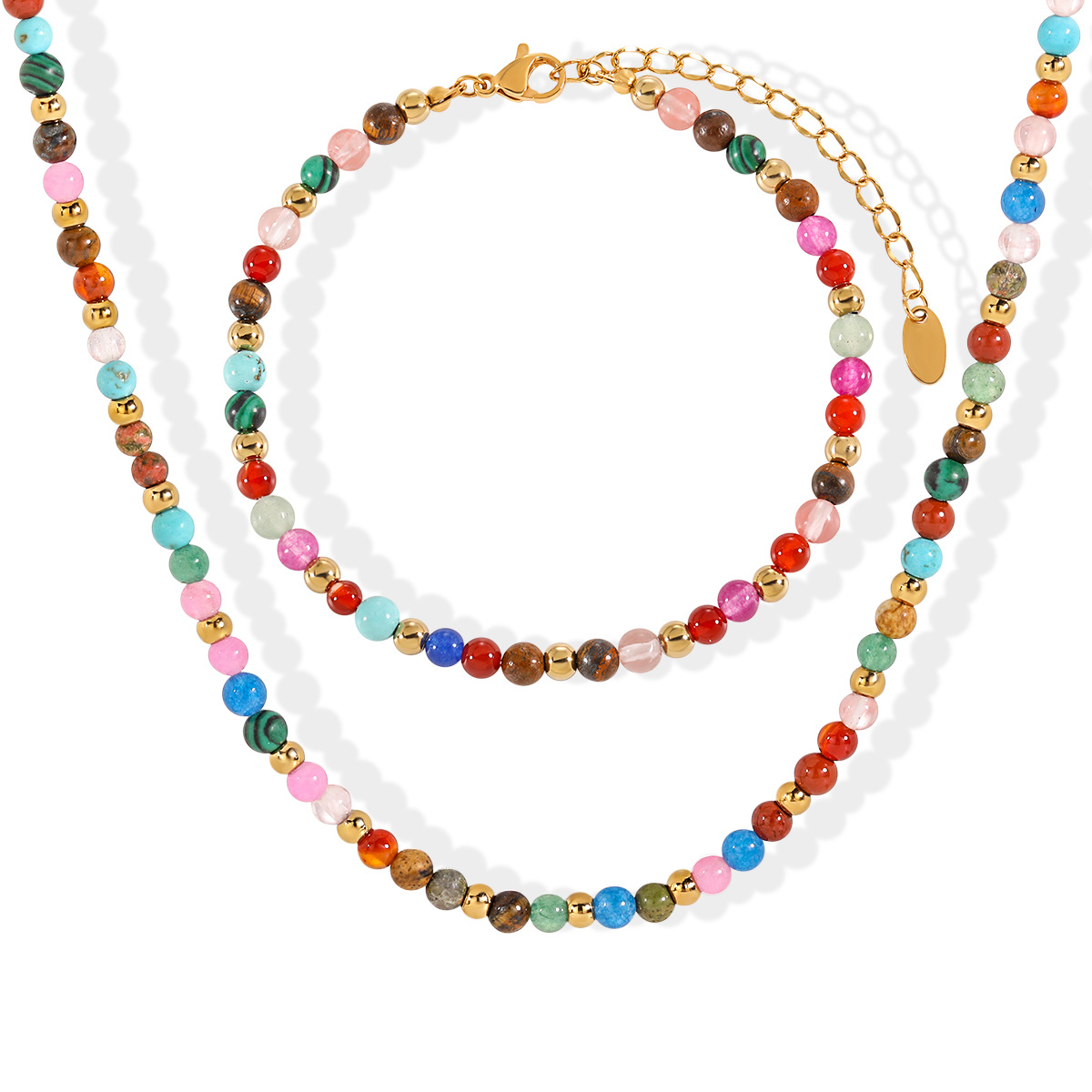
Beaded bracelets are a category that keeps growing. Natural stone beads (lava rock, tiger's eye, onyx) on stainless steel wire or cord have a bohemian, artisanal feel that customers love. They're particularly popular in the summer and at festivals. The key with beaded bracelets is to make sure the wire or cord is quality — cheap elastic breaks, and that's the #1 complaint about beaded bracelets.
Leather and steel combo bracelets are a men's category staple. A stainless steel clasp with a leather cord feels rugged and masculine, and they sell well year-round. Black leather with steel or black PVD hardware is the classic combination. Brown leather with gold PVD is gaining traction for customers who want a warmer look.
| Style | Wholesale Range | Retail Range | Reorder Frequency | Best Customer |
|---|---|---|---|---|
| Chain Bracelet | $1.20 - $6.00 | $12 - $35 | High (monthly) | Everyone, everyday wear |
| Bangle | $0.80 - $4.00 | $10 - $28 | High (seasonal) | Women, minimalist, stacking |
| Cuff | $2.00 - $8.00 | $18 - $45 | Medium | Statement lovers, men & women |
| Beaded | $1.00 - $5.00 | $12 - $30 | Medium (spring/summer) | Bohemian, festival, younger |
| Leather & Steel | $1.50 - $5.50 | $15 - $32 | Medium | Men, rugged style |
| Charm Bracelet | $2.50 - $9.00 | $20 - $50 | Low-Medium | Gifts, personalization |
| Tennis Bracelet | $3.00 - $12.00 | $25 - $60 | Medium (holiday) | Evening wear, gifts |
Sizing Is the #1 Cause of Bracelet Returns
If you've ever sold bracelets, you know that sizing is a headache. Necklaces have standard lengths that most people fit into. Rings have numbered sizes. But bracelets? Everyone's wrist is different, and getting the size wrong means a return.
Here's what we've learned from handling thousands of bracelet orders. For women's chain and link bracelets, 7 inches is the most common size, accounting for about 45% of sales. 6.5 inches is the second most popular (25%), and 7.5 inches comes in third (20%). Sizes under 6 inches or over 8 inches are niche — order those sparingly.
For men's bracelets, 8 inches is the standard (40% of sales), followed by 8.5 inches (30%) and 7.5 inches (20%). Men with larger wrists (9"+) are a real but smaller market — if you're ordering men's styles, include a few 9-inch options but don't overdo it.
Bangles are a different story. Since they slip over the hand, the measurement that matters is the inner diameter, not the circumference. Standard women's bangles are 2.5 inches (63mm) in inner diameter. Small is 2.25 inches (57mm), large is 2.75 inches (70mm). Most people fit the standard 2.5 inch size. If you're unsure, order standard — it fits about 70% of women.
- Women's chain bracelets: 6.5" (25%), 7" (45%), 7.5" (20%), 8" (10%)
- Men's chain bracelets: 7.5" (20%), 8" (40%), 8.5" (30%), 9" (10%)
- Women's bangles: 2.25" dia (15%), 2.5" dia (70%), 2.75" dia (15%)
- Cuffs: One size fits most — the open design allows adjustment, but test the spring tension before ordering
- Beaded bracelets: Stretch cords fit most wrists (6-8 inches), but use quality elastic — cheap cord breaks within weeks
The Stacking Trend and How to Profit From It
Stacking isn't just for necklaces. Bracelet stacking — wearing 3-5 bracelets on one wrist — has been a major trend for several years and it's not going anywhere. The good news for retailers is that stacking means customers buy multiple bracelets at once.
The most profitable approach is to sell pre-curated bracelet stacks. A set of 3 bangles or a mix of chain + bangle + beaded that costs you $3-$5 wholesale can retail for $25-$40. Customers love the curated look because they don't have to figure out what goes together. And the perceived value is high because they think they're getting three bracelets.
If you don't want to sell pre-made sets, at least display your bracelets in stacked arrangements. Put 3-4 complementary styles on the same display card or bust. Customers are visual — if they see a great stack, they'll buy all three. We've seen stores double their bracelet sales simply by changing how they display them from individual pieces to stacked arrangements.
Clasps and Quality: What to Check
Bracelet clasps take more abuse than necklace clasps because bracelets are on your hands, banging into things all day. A cheap clasp will fail, and that's a return. Here's what to look for when evaluating bracelet quality.
Lobster clasps are the most secure and the most popular. They're easy to operate with one hand (mostly) and they stay closed. Spring ring clasps are cheaper but more finicky — customers complain they're hard to open and they can pop open accidentally. Toggle clasps look great but can come undone if the fit isn't right. Magnetic clasps are easy to use but can be too weak for heavier bracelets — always test the magnet strength before ordering.
For chain bracelets, check the end caps where the chain meets the clasp. This is a common failure point. The end cap should be smoothly soldered with no gaps. Give it a gentle tug — if it moves or feels loose, the bracelet will break within a few weeks of wear.
For bangles and cuffs, check the finish on the inside. Rough edges on the inside of a bangle will scratch the customer's wrist — that's an immediate return. Run your finger along the inside edge; it should be completely smooth.
Pricing Strategy for Bracelets
Bracelets are interesting because customers are less price-sensitive than they are with necklaces. A necklace that costs $3 wholesale might be priced at $20, but a bracelet that costs $3 can often go for $25-$28 because customers perceive bracelets as more of an "impulse" or "add-on" purchase.
The standard markup for bracelets is 4-6x wholesale cost. A $2 bracelet retails for $12-$18. A $5 bracelet retails for $25-$35. For premium or statement pieces, you can go higher — 6-8x is common for cuffs and tennis bracelets.
One pricing tactic that works well: "2 for $30" or "3 for $40" deals on basic bangles or chain bracelets. Customers who would have bought one bracelet will buy two or three because the deal feels too good to pass up. Even though you're discounting per unit, the total sale is higher and you're moving more inventory.
Building a Bracelet Collection That Works
A good bracelet collection doesn't need to be huge. Start with these categories and build from there:
- Everyday basics (30% of inventory): Simple chain bracelets in gold, steel, and black. 7" for women, 8" for men. These are your consistent sellers — never let them go out of stock.
- Stackable bangles (25%): Thin, delicate bangles in mixed finishes. Display them in stacks of 3-5. These drive impulse purchases and high attach rates.
- Statement pieces (20%): Cuffs, wide cubans, tennis bracelets. Higher price points, higher margins. Rotate seasonally.
- Trend items (15%): Beaded bracelets, leather combos, charm bracelets. Test small quantities, reorder what sells.
- Gift sets (10%): Pre-curated bracelet stacks, matching necklace + bracelet sets. Higher average order value, great for holiday season.
The biggest mistake we see new buyers make is ordering too many trendy styles and not enough basics. Trends come and go, but a simple gold chain bracelet will always sell. Make sure your basics are covered first, then experiment with trends using small test orders.
Frequently Asked Questions
Related Reading
- Stainless Steel Bracelets and Rings FAQ: Sizing, Styles, Stacking, and Care — Sizing, Styles, Stacking, and Care
- Stainless Steel Bracelets Wholesale: Cuffs, Chains & Bangles Guide — Cuffs, Chains & Bangles Buying Guide
- Stainless Steel Necklace Wholesale: Chain Types, Lengths & What Actually Sells — Chain Types, Lengths & What Actually Sells
- Stainless Steel Jewelry Layering & Stacking Guide: Style Tips That Sell More Pieces — Style Tips That Sell More Pieces
400+ Bracelet Styles · Stackable Sets · Low MOQ $150
Request Bracelet SamplesFactory-Direct Since 1998 · 31,000+ Styles · Quality Guaranteed
- Company Info
- Feedback
- Customer Reviews
- About Us
- Dropshipping
- FAQ
- Jewelry Wholesale Blog
- User Center
- Forget Password
- My Orders
- Tracking Order
- My Account
- Register
- Payment & Shipping
- Terms And Conditions
- Return Policy
- Shipping Methods
- Payment Methods
- Discount