Anklet and Toe Ring Jewelry FAQ
Sizing, Materials, Summer Trends, Permanent Anklets, and Wholesale Buying Guide
Anklets and Toe Rings Are Having a Major Moment
Foot jewelry has moved far beyond the beach souvenir stand. The global anklet market is projected to grow at a compound annual rate of 6.8% through 2030, reaching $2.1 billion. Driven by 1990s nostalgia, celebrity styling, and the permanent jewelry trend, anklets and toe rings are now mainstream fashion accessories worn year-round, not just on vacation.
For jewelry retailers and wholesalers, this is a category worth paying attention to. Anklets have high impulse-purchase potential, strong seasonal demand from March through August, and growing winter sales as customers layer them with socks and boots. Toe rings, once a niche item, are becoming a staple summer accessory with adjustable designs that fit any foot.
316L stainless steel is the ideal material for foot jewelry because it withstands sand, saltwater, sunscreen, sweat, and daily friction better than plated brass or sterling silver. This guide covers everything buyers and sellers need to know about anklets and toe rings.
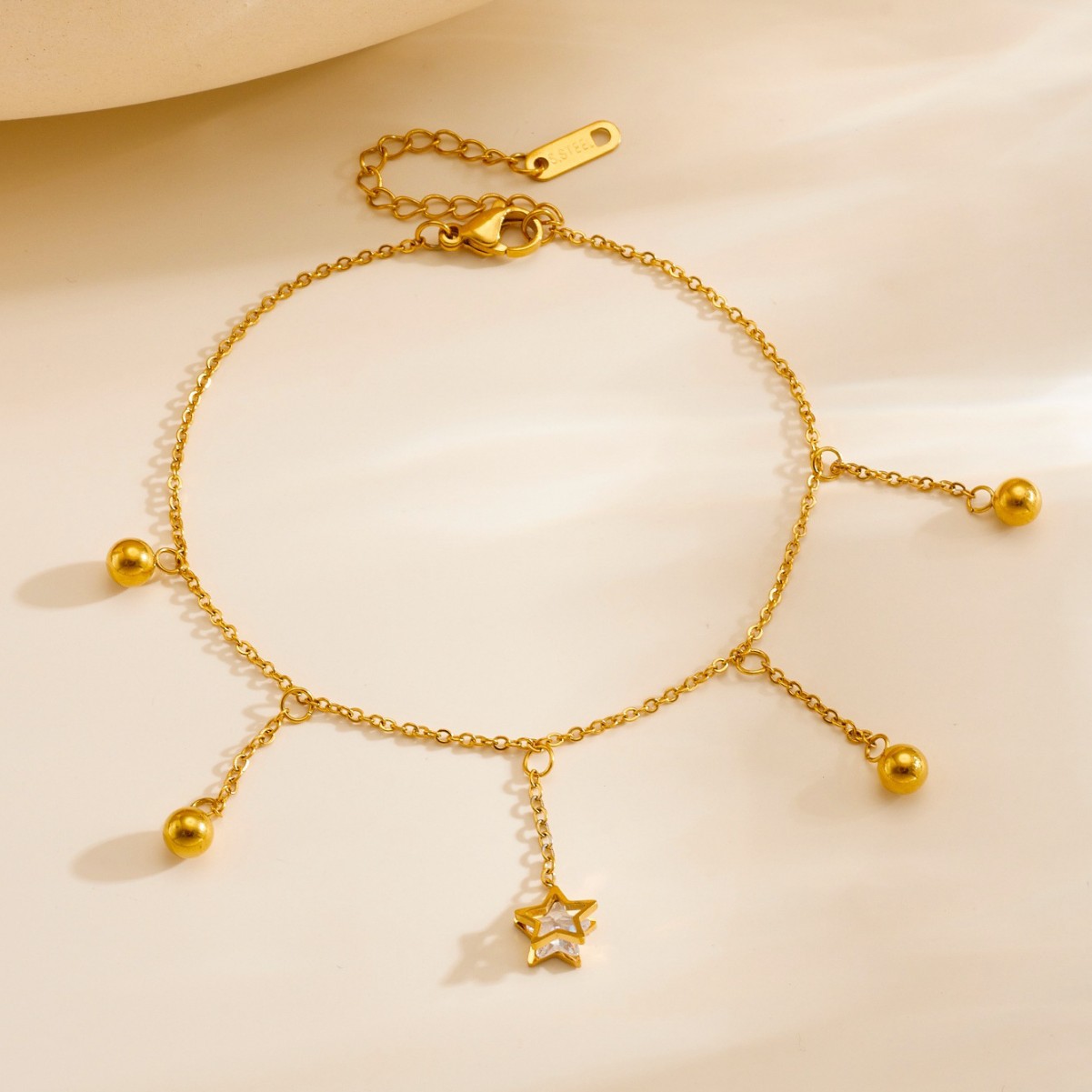
The summer opportunity: Anklet sales typically spike 40 to 60% from April through July compared to winter months. Retailers who stock up in February and March capture the full summer season. The best-selling styles are minimalist chain anklets, charm anklets (butterfly, starfish, evil eye), and layered sets. Toe rings peak in June and July, with adjustable band styles outselling fixed-size rings by about 3 to 1. PVD gold and rose gold finishes are the top sellers, followed by natural steel and black IP plating.
Sizing and Fit Questions
How do I measure for an anklet and what sizes should I stock?
Anklet sizing is simpler than ring sizing, but getting it right matters for comfort and returns: (1) Standard women's anklet lengths range from 8 inches (20cm) to 11 inches (28cm). The most common size is 9 to 10 inches (23 to 25cm), which fits about 70% of women. (2) To measure: wrap a soft measuring tape or string around the ankle where the customer wants the anklet to sit (usually just above the ankle bone). Add 0.5 to 1 inch for comfort. A snug fit is 0.5 inch added; a loose, dangling fit is 1 inch added. (3) For wholesale buying, stock these sizes to cover most customers: (a) 8 inches (20cm): petite ankles, teens. (b) 9 inches (23cm): small to average. (c) 10 inches (25cm): average to large, the best-selling size. (d) 11 inches (28cm): larger ankles or customers who prefer a loose fit. (4) Anklets with extension chains (1 to 2 inches) are the most versatile because they fit a range of sizes. Look for styles with a 2-inch extender chain, which covers 8 to 12 inches effectively. (5) For men's anklets, sizes run 10 to 13 inches (25 to 33cm). The men's anklet market is smaller but growing, especially for chain styles and leather-cord designs. (6) The most common customer complaint is anklets that are too tight and dig into the ankle. When in doubt, size up. A slightly loose anklet is more comfortable than a tight one. (7) For retailers, offering a sizing guide on your website (with a printable measuring tape) reduces returns by 20 to 30%. Include a note that anklets should be loose enough to fit one finger between the chain and the ankle.
Are toe rings one-size-fits-all or do they need sizing?
Toe rings come in two main styles, and sizing works differently for each: (1) Adjustable toe rings: These have an open band that can be gently squeezed or expanded to fit any toe. This is the most popular style for retail because it eliminates sizing concerns. Most adjustable toe rings fit toe circumferences from 1.5 to 2.5 inches (4 to 6cm). They are easy for customers to adjust at home. (2) Fixed-size toe rings: These are solid bands in specific sizes, similar to finger rings but smaller. Common toe ring sizes are 2 to 7 (US ring size), with size 3 to 4 being most common for the second toe. Fixed-size rings are more comfortable for long-term wear because they do not have an open end that can catch. (3) The second toe (next to the big toe) is the most common toe for wearing a ring, followed by the big toe and middle toe. Second toes typically measure size 3 to 5. (4) For wholesale, adjustable toe rings are the safer bet because they fit everyone and require no sizing guide. Stock adjustable styles in a ratio of about 70% adjustable to 30% fixed. (5) Toe rings should fit snugly enough to stay on but loose enough to slide on and off over the toe joint. They should not cut off circulation or leave a deep indentation. (6) Midi rings (worn on the finger between the knuckle and nail) can double as toe rings for customers with smaller toes, giving you additional merchandising flexibility. (7) The best-selling toe ring themes for summer are: starfish, seashell, wave, dolphin, flower, and simple plain bands. Gold PVD and rose gold PVD outsell silver by about 2 to 1 in the toe ring category.
Can I wear anklets and toe rings every day, including in water?
This depends entirely on the material: (1) 316L stainless steel anklets and toe rings are waterproof and can be worn in the ocean, pool, shower, and sweat. The chromium and molybdenum in 316L create a passive oxide layer that resists corrosion from saltwater and chlorine. PVD gold plating on stainless steel is molecularly bonded and will not flake off from water exposure. This is the biggest advantage of stainless steel foot jewelry over plated brass. (2) Gold-plated brass anklets should be removed before swimming. Chlorine and saltwater accelerate plating wear, and the brass underneath can turn skin green. Expect plated brass anklets to show wear after 1 to 3 months of regular water exposure. (3) Sterling silver anklets can be worn in water but will tarnish faster. Silver reacts with sulfur in water and air, causing blackening. Regular polishing with a silver cloth is needed. Silver is also softer and can scratch more easily on sand and concrete. (4) Gold-filled anklets (5% gold layer bonded to brass) are more durable than plated but still should be removed for swimming to extend life. They typically last 1 to 3 years with regular wear. (5) Solid gold anklets (10K+) are the most durable and can be worn 24/7 in any condition, but are significantly more expensive. (6) For toe rings specifically, water exposure is even more important because feet are in sandals, water, and sand all summer. 316L stainless steel adjustable toe rings are the most practical choice for daily summer wear. (7) Care tip for stainless steel foot jewelry: Rinse with fresh water after ocean or pool exposure to remove salt and chlorine residue. Wipe dry with a soft cloth. This simple routine keeps PVD finishes looking new for 2 to 5 years. (8) For retailers, marketing stainless steel anklets as "waterproof," "sweatproof," and "tarnish-free" is a strong selling point that differentiates them from cheaper alternatives. Customers are willing to pay $5 to $10 more for jewelry they do not have to remove.
| Material | Waterproof? | Durability | Wholesale Price | Retail Price | Lifespan (daily wear) |
|---|
| 316L Stainless Steel | Yes | Excellent | $1.50-$5 | $8-$20 | 2-5+ years |
| Gold-Plated Brass | No | Fair | $0.80-$3 | $5-$15 | 1-6 months |
| Gold-Filled | Limited | Good | $3-$10 | $15-$35 | 1-3 years |
| Sterling Silver | Yes (tarnishes) | Good | $4-$15 | $18-$45 | 5+ years (with care) |
| Solid Gold (10K+) | Yes | Excellent | $50-$300+ | $120-$800+ | Lifetime |
Style and Trend Questions
What anklet styles are trending right now?
Based on 2026 retail data and social media trends, these are the top-selling anklet styles: (1) Minimalist chain anklets: Thin, delicate chains (cable, figaro, rope) in gold PVD. The #1 bestseller. Customers wear them alone or layered. Simple, elegant, and versatile. (2) Butterfly and nature charm anklets: Butterfly, dragonfly, leaf, and flower charms. Driven by Y2K and cottagecore aesthetics. Perform extremely well on Instagram and TikTok. (3) Layered anklet sets: Two or three chains of different thicknesses sold as a set. Higher average order value ($15 to $25) and strong visual appeal. (4) Pearl anklets: Freshwater pearl or shell pearl anklets, often mixed with gold chain. Boho and beachy vibe. Growing in popularity for weddings and resort wear. (5) Cuban link anklets: Thicker, bolder chains for customers who want a statement look. Popular with younger buyers and men's anklet customers. (6) Evil eye and spiritual charms: Hamsa hand, evil eye, lotus, and Om symbols. Steady sellers with cultural and protective meaning. (7) Initial and personalized anklets: Letter charms, nameplates, and custom engraving. Higher price point and strong gift potential. (8) Permanent anklets: Welded chain anklets that customers cannot remove without cutting. The fastest-growing segment, driven by the permanent jewelry trend. Retailers charge $40 to $100 for the welding service plus the chain cost. (9) 1990s revival styles: Beaded anklets, shell anklets, and tattoo choker-style anklets. Nostalgia-driven trend that appeals to Millennials and Gen Z. (10) For wholesale buying, allocate inventory roughly as follows: 30% minimalist chains, 20% charm anklets, 15% layered sets, 15% pearl/beaded, 10% Cuban/bold, 10% other (evil eye, initial, etc.). This mix covers the broadest demand. (11) Color trends: Gold PVD is 50% of sales, rose gold PVD is 25%, natural steel (silver) is 15%, black IP is 10%. Two-tone (gold and silver mixed) is a growing niche.
What is a permanent anklet and should my store offer it?
Permanent jewelry (also called welded or forever jewelry) is one of the fastest-growing trends in the jewelry industry, and anklets are a natural extension: (1) How it works: A jeweler or trained staff member measures a chain around the customer's ankle, cuts it to size, and welds the ends together using a small arc welder (pulse arc welder, not a soldering torch). The result is a seamless clasp-free anklet that the customer cannot remove. (2) The appeal: It is a commitment symbol (like friendship bracelets or wedding rings), it is convenient (no clasp to fiddle with), and it creates an experience. Customers often come with friends or partners for "permanent jewelry parties." (3) Cost to start: A pulse arc welder costs $300 to $800. Chains cost $2 to $10 per foot wholesale. Training takes a few hours. Total startup cost is under $1,000. (4) Pricing: Permanent anklets typically retail for $40 to $100 depending on chain style and thickness. The margin is 70 to 85% because the chain cost is low and the service commands a premium. (5) Best chains for permanent anklets: 316L stainless steel cable chains, figaro chains, and rope chains in 1.5mm to 3mm thickness. Gold PVD finishes are most popular. The chain must be thin enough to weld cleanly but strong enough for daily wear. (6) Considerations: (a) Customers need to understand it is permanent (they must cut it off to remove it). (b) You need a waiver for liability. (c) The welding area needs to be clean and well-lit. (d) Some customers may have metal sensitivities, so 316L stainless steel or gold-filled is safest. (7) Should you offer it? If you have a physical store with foot traffic, yes. Permanent jewelry services bring in new customers, generate social media content, and have excellent margins. Many stores report that permanent jewelry customers spend an additional $20 to $50 on other items during their visit. (8) For online-only stores, permanent anklets are not feasible, but you can sell "permanent anklet kits" with fine chains and instructions for local jewelers to weld. This is a smaller but growing market. (9) The trend shows no signs of slowing. Permanent jewelry was a $50 million market in 2023 and is projected to exceed $200 million by 2027. Anklets are the second most popular permanent jewelry category after bracelets.
How do I style and merchandise anklets for maximum sales?
Anklets are visual, impulse-driven products, so merchandising matters more than for many other jewelry categories: (1) Display anklets on ankle forms or foot mannequins, not just on cards. Customers want to see how they look on a foot. Ankle forms cost $10 to $30 each and dramatically increase sales. (2) Group anklets by style and color. Create displays for "Minimalist Gold," "Beach & Boho," "Layered Sets," and "Statement Chains." This helps customers navigate the selection. (3) Cross-merchandise with sandals, swimwear, and summer clothing if you sell those categories. An anklet next to a pair of sandals increases the likelihood of both being purchased. (4) Create "anklet stacks" or "ankle party" sets with 2 to 3 complementary chains. Sets have 30 to 50% higher average order value than individual pieces. (5) Use signage that highlights material benefits: "Waterproof 316L Stainless Steel," "No Tarnish," "Wear in Ocean and Pool." These are key differentiators from cheap fashion anklets. (6) For online stores, use lifestyle photos showing anklets on ankles with sandals, bare feet on sand, and layered looks. Product-on-white photos do not sell anklets as well as lifestyle shots. (7) Seasonal merchandising: Start displaying anklets in February (before spring break), peak in May-June, and transition to "fall anklets" (layered with boots and socks) in September. (8) Toe rings display well in small bowls or trays near the checkout counter. They are classic impulse purchases at $5 to $12. (9) Pricing strategy: Entry-level anklets at $8 to $12 (simple chains), mid-range at $15 to $25 (charms, layered sets), premium at $30 to $50 (pearl, Cuban, permanent). This gives customers options at every budget. (10) The most successful anklet retailers we work with treat foot jewelry as a year-round category, not just a summer item. Winter anklets worn over tights or with boots are a growing styling trend that extends the selling season.
Wholesale Buying and Business Questions
How much inventory should I buy for anklet season?
Inventory planning for anklets requires anticipating the summer peak: (1) For a small boutique or online store, start with 15 to 25 anklet styles and 10 to 15 toe ring styles. Order 5 to 10 pieces per style for the first order. This gives you variety without overcommitting capital. (2) Total initial investment: $200 to $500 at wholesale prices ($1.50 to $5 per anklet, $0.50 to $2 per toe ring). With Showfay's $150 MOQ, you can build a solid foot jewelry collection in one order. (3) Reorder timing: Place your initial order in January or February so inventory arrives by March. Reorder bestsellers every 3 to 4 weeks through August. Do not wait until you sell out, because summer demand moves fast. (4) The 80/20 rule applies: 20% of your anklet styles will generate 80% of sales. Identify those top sellers quickly and reorder them aggressively. Slow-moving styles can be marked down at the end of summer. (5) For toe rings, order more than you think. They are small, cheap, and impulse-driven. A display of 50+ toe rings near checkout generates more sales than a sparse selection of 10. (6) End-of-season strategy: Mark down remaining anklets by 30 to 50% in late August and early September. Many customers shop for next summer at a discount, and clearing inventory frees up cash for fall merchandise. (7) If you are testing the category for the first time, start with a smaller order ($150 to $200) and see what sells. You can always reorder. The low wholesale cost of stainless steel anklets makes this a low-risk category to test. (8) Keep records of which styles sell, in which colors, and at what price point. This data makes next year's buying much more accurate. After two seasons, you will have a clear picture of your customers' preferences.
What is the profit margin on anklets and toe rings?
Anklets and toe rings have strong margins, especially in stainless steel: (1) Standard markup: 3x to 5x wholesale cost. A stainless steel anklet that costs $2.50 wholesale retails for $10 to $15. A toe ring that costs $1 wholesale retails for $5 to $8. (2) Gross margins typically range from 65% to 80%, which is higher than many other jewelry categories because the wholesale cost is low. (3) Layered sets have even better margins. A set of 3 chains costing $4 wholesale can retail for $18 to $25, a 4.5x to 6x markup. (4) Permanent anklet services have the highest margins: 70 to 85% after accounting for chain cost and welder amortization. (5) Factors that support higher pricing: (a) PVD gold or rose gold finish (customers pay 20-30% more for gold look). (b) Charm or pendant detail. (c) Waterproof/tarnish-free marketing. (d) Branded packaging. (e) Layering sets. (6) Do not underprice stainless steel anklets. Customers expect to pay $10 to $20 for a quality anklet. Pricing at $5 signals cheap quality and attracts customers who complain about everything. (7) Toe rings are high-volume, low-ticket items. At $6 to $10 each with 70%+ margin, they generate significant profit through volume, especially when displayed at checkout. (8) The key metric is margin per square foot of display space. Anklets and toe rings are small, so you can display a large selection in a small area. This makes them excellent use of retail space. (9) For online sellers, shipping cost per item is low because anklets and toe rings are lightweight. First-class shipping costs $3 to $4, which is easily absorbed in the product price or added as a flat shipping fee. (10) Many retailers report that anklets and toe rings have the highest sell-through rate of any jewelry category in summer, often 70 to 85% of inventory sold at full price before markdowns.
- Market size: Global anklet market growing at 6.8% CAGR, projected $2.1B by 2030. Foot jewelry is mainstream, not just beachwear.
- Sizing: Women's anklets 8-11 inches, 9-10 inches most common. Extension chains make styles versatile. Toe rings: adjustable styles outsell fixed 3-to-1.
- Best material: 316L stainless steel with PVD finish. Waterproof, sweatproof, tarnish-free, withstands saltwater and chlorine. Lasts 2-5+ years.
- Top styles: Minimalist chains (#1), butterfly/nature charms, layered sets, pearl anklets, Cuban links, evil eye, permanent welded anklets.
- Permanent anklets: Fastest-growing segment. $40-$100 retail, 70-85% margin. Startup under $1,000. Brings new customers and social media buzz.
- Seasonality: Sales spike 40-60% April-July. Order in Jan-Feb, reorder every 3-4 weeks. 80/20 rule: 20% of styles = 80% of sales.
- Margins: 65-80% gross margin. 3-5x markup. Layered sets and permanent services have highest margins. Toe rings are high-volume impulse buys.
- Merchandising: Display on ankle forms, lifestyle photos online, group by style, cross-merchandise with sandals, checkout impulse display for toe rings.
Final Anklet and Toe Ring Advice
Foot jewelry is no longer a seasonal niche. With the permanent jewelry trend, 1990s revival, and growing year-round styling, anklets and toe rings deserve a permanent place in every jewelry retailer's inventory. The key is choosing the right material: 316L stainless steel with PVD finishes gives customers the waterproof, tarnish-free durability they want at a price that supports healthy margins.
Start with a curated selection of minimalist chains, charm anklets, and adjustable toe rings. Test what your customers respond to, reorder aggressively on bestsellers, and consider adding permanent anklet services if you have a physical location. The category has low startup cost, strong margins, and high customer satisfaction when the quality is right.
For wholesale buyers, Showfay's stainless steel anklet and bracelet collection offers the styles, finishes, and price points that sell through. With a $150 minimum order, you can build a complete foot jewelry collection without overcommitting capital.
Related Reading
- Stainless Steel Anklets & Body Jewelry: The Niche Category That Drives Repeat Sales — The Niche Category That Drives Repeat Sales
- Stainless Steel Anklets Wholesale: Why They're Trending and What to Stock — Why They're Trending and What to Stock
- Stainless Steel Bracelets and Rings FAQ: Sizing, Styles, Stacking, and Care — Sizing, Styles, Stacking, and Care
- Cuban Link Chain FAQ: Widths, Styles, Gold vs Steel, and Wholesale Guide — Styles, Widths, Lengths, Miami vs Cuban, Gold vs Steel, and Wholesale Buying Guide
316L Stainless Steel · PVD Gold Finishes · Waterproof · Low MOQ $150
Request Foot Jewelry CatalogFactory-Direct Since 1998 · 31,000+ Styles · Fast Shipping