Stainless Steel Necklaces FAQ
Chains, Pendants, Layering, and Sizing
The Questions Customers Ask About Necklaces
Necklaces are the centerpiece of most jewelry collections. They're the first thing people notice, the piece that ties an outfit together, and the category that often has the highest average order value. But necklaces also generate more questions than any other jewelry type. What length should I buy? What chain style is strongest? How do I layer necklaces without tangling? Will this pendant fit my chain?
In this guide, we answer the most common necklace questions we hear from both consumers and retailers. These answers come from 25 years of manufacturing stainless steel necklaces and from feedback from thousands of wholesale customers who sell them every day.
Whether you're buying for yourself or stocking your store, this guide will help you make better decisions about necklaces.
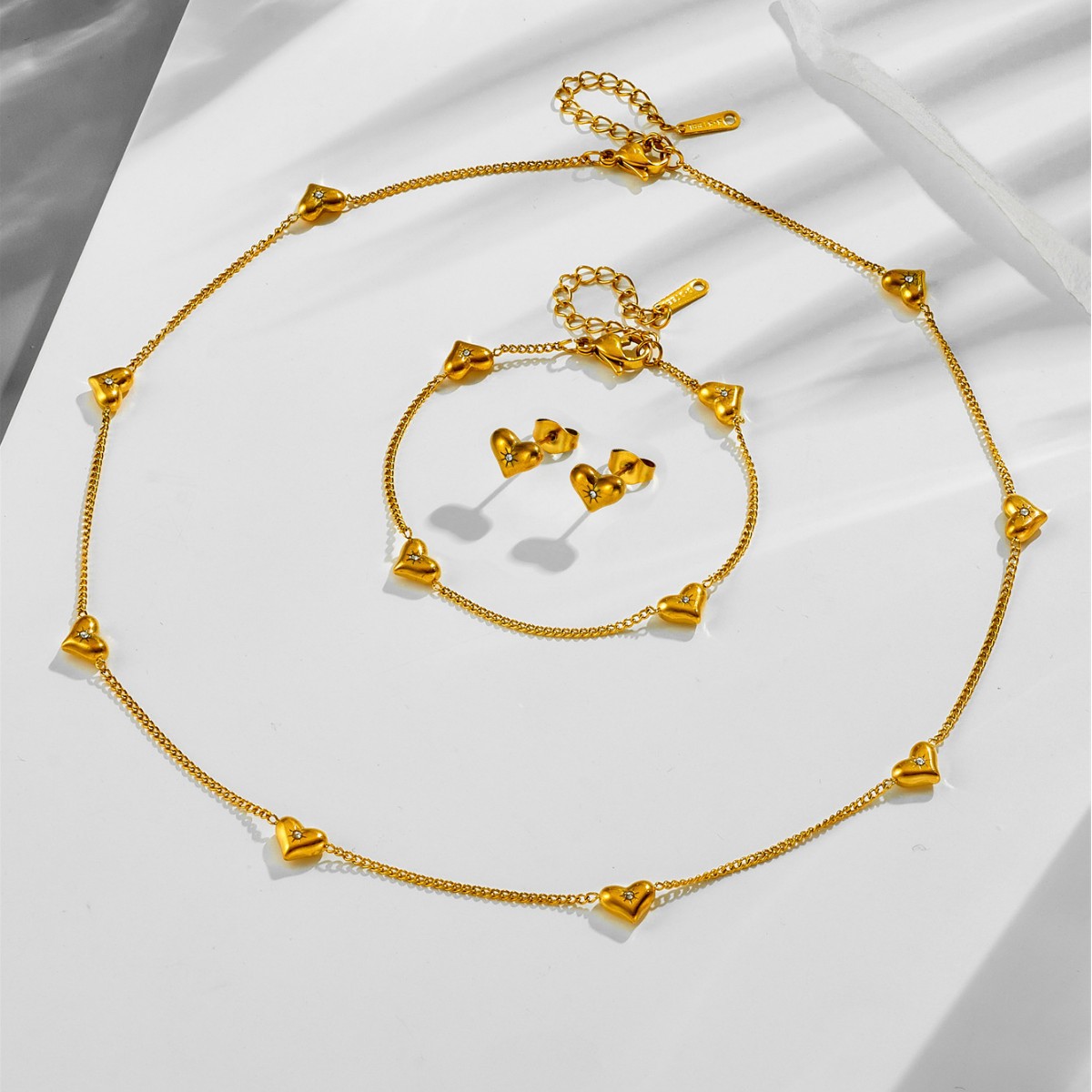
Why necklaces matter for retailers: Necklaces typically have the highest average selling price of any jewelry category ($20-$40 retail vs. $10-$20 for earrings). They also have the highest attachment rate, customers buying a necklace often add matching earrings or a bracelet. A strong necklace collection can be the foundation of a profitable jewelry business.
Chain Style Questions
What are the most popular chain styles, and which should I stock?
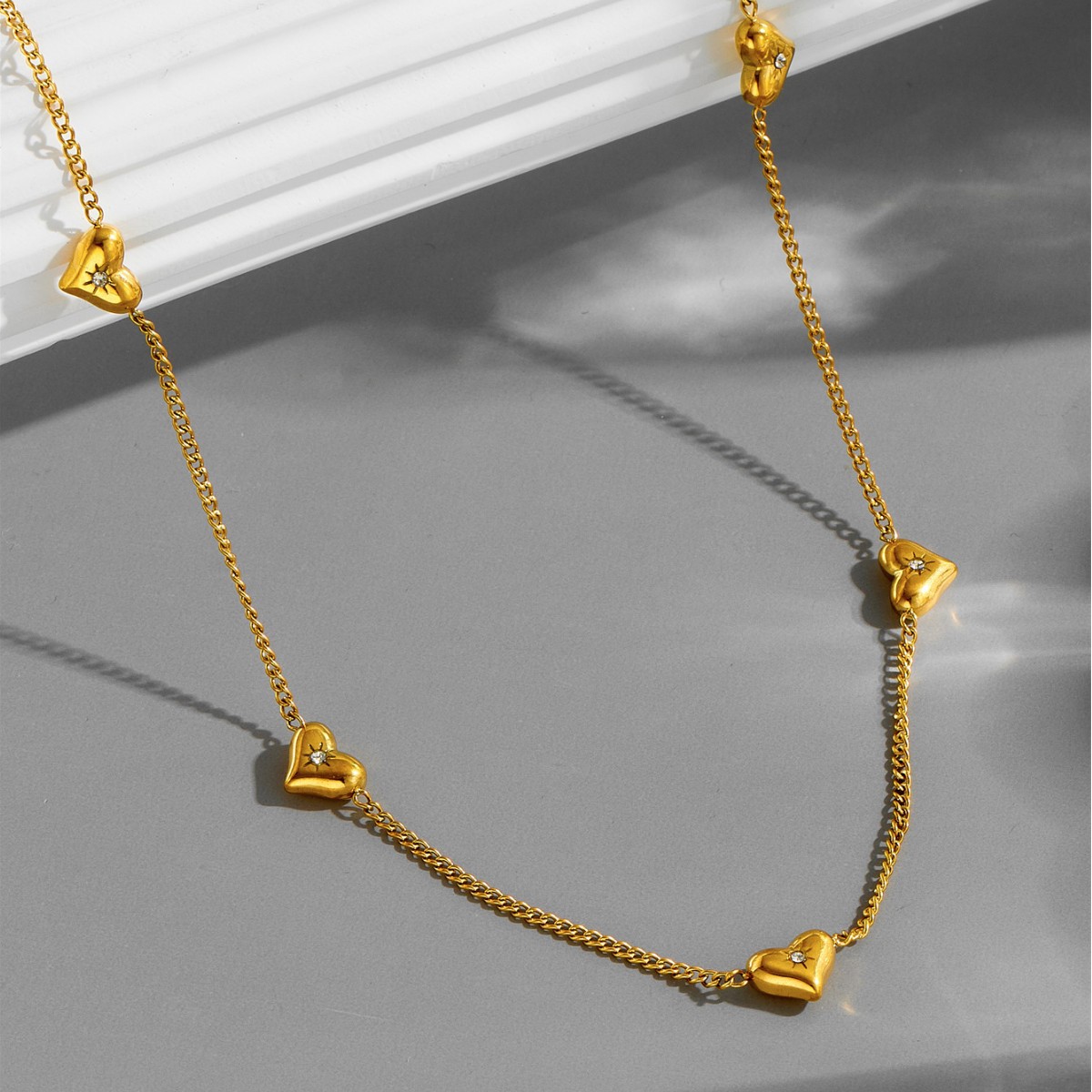
The top-selling chain styles for stainless steel necklaces are: (1) Cable chain, the classic oval-link chain, about 25% of sales. It's simple, versatile, and works with almost any pendant. (2) Curb chain, with flattened, interlocking links, about 20% of sales and growing fast, especially in thicker widths. (3) Box chain, with square box-shaped links, about 15% of sales, popular for pendants because it's smooth and doesn't kink. (4) Snake chain, smooth and flexible, about 12% of sales, elegant for pendants but can kink if bent. (5) Rope chain, twisted and textured, about 10% of sales, popular for men's jewelry. (6) Figaro chain, alternating small and large links, about 8% of sales, classic unisex style. For a new collection, start with cable, curb, and box chains in 1-3mm widths. These three cover most customer needs. Add rope and figaro once you have a steady customer base.
What chain width is most popular for women and men?
For women, the most popular chain widths are 1-2mm for delicate, everyday wear, and 2-3mm for a more substantial look. Chains under 1mm are very dainty and can be fragile, while chains over 4mm tend to look too heavy for most women's everyday wear. For men, the most popular widths are 3-5mm for everyday wear, and 5-8mm for bolder, statement looks. Men's chains over 10mm are a niche market (hip-hop style) and sell less consistently. When buying wholesale, stock 1.5mm and 2.5mm chains for women, and 3mm and 5mm chains for men. These four widths cover about 80% of customer demand. PVD gold is the most popular finish for both genders, followed by polished steel.
Which chain style is strongest and least likely to break?
In general, thicker chains are stronger than thin ones, and some link styles are inherently stronger than others. Cable chains and curb chains are the strongest because each link is solid and interlocks securely. Box chains are also strong but can kink if sharply bent. Snake chains are the most fragile because they're made of tightly woven metal that can crease and break if bent too sharply. For pendants, we recommend cable or curb chains in at least 1.5mm width, they can support the weight of most pendants without stretching or breaking. For customers who are hard on jewelry or who work with their hands, a 2mm+ cable or curb chain is the safest choice. All of our chains come with sturdy lobster clasps, which are more secure than spring ring clasps.
What's the difference between a cable chain and a curb chain?
Cable chains are the most basic chain style, made of uniformly sized oval or round links connected in a simple alternating pattern. They lie flat and have a classic, understated look. Curb chains are similar but the links are flattened and twisted so they lie flat against each other, creating a smoother, more continuous appearance. Curb chains have a slightly more substantial and modern look, especially in thicker widths. In terms of strength and durability, they're very similar. Cable chains are more traditional and work well with pendants, while curb chains are trendier and can be worn alone as a statement piece. Both are excellent choices, and most successful retailers stock both styles.
Length and Sizing Questions
What necklace length should I buy, and how do lengths fit?
Necklace length is measured in inches, and the most common lengths are: 14 inches (choker, sits tight at the base of the neck), 16 inches (sits at the base of the neck, like a tight collar), 18 inches (sits at the collarbone, the most popular women's length), 20 inches (sits just below the collarbone), 22 inches (sits at or just above the sternum), 24 inches (sits at the sternum, good for layering), and 30 inches (long, sits below the chest). For women, 18 inches is by far the most popular, accounting for about 40% of sales. 16 and 20 inches are next at about 20% each. For men, 22 inches is the most popular (about 35%), followed by 20 and 24 inches. If you're buying a gift and aren't sure of the size, 18 inches for women and 22 inches for men are safe choices. Necklaces with 2-inch extension chains are even better, as they let the wearer adjust the length.
How do I measure my neck for the right necklace length?
The easiest way is to take a soft measuring tape and wrap it around your neck at the position where you want the necklace to sit. If you don't have a measuring tape, use a piece of string, wrap it around your neck, mark the length, and measure it with a ruler. Keep in mind that neck size varies, and the same length necklace will sit differently on different people. A 16-inch necklace might be a choker on someone with a thicker neck and a loose collar on someone with a thinner neck. For retailers, we recommend displaying necklaces on busts or stands at different lengths so customers can see how they fit. Including a size chart on your website or in your store also helps customers choose the right length and reduces returns.
What length chain is best for a pendant?
The best chain length for a pendant depends on the pendant size and the wearer's preference. For small pendants (under 15mm), an 18-inch chain works well, the pendant sits right at the collarbone where it's visible but not overwhelming. For medium pendants (15-25mm), a 20-inch chain is ideal, giving the pendant room to sit just below the collarbone. For large pendants (over 25mm), a 22-24 inch chain works best, so the pendant doesn't sit too high and look crowded. For men's pendants (crosses, dog tags), 22-24 inches is standard. The general rule: the bigger the pendant, the longer the chain. Also, make sure the pendant's bail (the loop that the chain goes through) is large enough for your chain width. A 3mm chain won't fit through a bail made for a 1mm chain.
| Length | Name | Where It Sits | Best For | Popularity |
|---|
| 14" | Choker | Tight around neck | Trendy, formal | Low |
| 16" | Collar | Base of neck | Everyday, petite | Medium |
| 18" | Princess | Collarbone | Most popular, pendants | Very High |
| 20" | Matinee | Below collarbone | Layering, larger pendants | High |
| 22" | | Upper sternum | Men's standard, layering | High (men) |
| 24" | | Sternum | Long layers, big pendants | Medium |
| 30" | Rope / Lariat | Below chest | Statement, layering | Low |
Layering Questions
How do I layer necklaces without them tangling?
Layering necklaces is one of the hottest jewelry trends, but tangling is the number one complaint. Here's how to avoid it. First, use necklaces of different lengths, at least 2 inches apart. A 16-inch, 18-inch, and 20-inch combination works well. Second, vary the chain weights, a delicate chain with a pendant, a medium chain, and a chunky chain create visual interest and are less likely to twist together. Third, consider using a necklace layering clasp, a small device that lets you attach multiple necklaces to one clasp, so they stay separated. Fourth, put on the shortest necklace first, then the next length, and so on. Finally, take necklaces off in reverse order and store them hanging or in separate compartments. With a little practice, layering becomes easy and the results are worth it.
How many necklaces should I layer at once?
Two to three necklaces is the sweet spot for most looks. Two necklaces is simple and elegant, perfect for everyday wear. Three necklaces creates a more curated, fashion-forward look. Four or more can look cluttered and is harder to manage without tangling. For beginners, start with two: a shorter chain with a small pendant and a slightly longer plain chain. Once you're comfortable, add a third. The key is balance, don't put large pendants on every layer. One statement pendant with two simpler chains works better than three busy pieces. For retailers, pre-curated layering sets (two or three necklaces sold together) are very popular and have higher average order values than individual necklaces.
Can I mix gold and silver necklaces in a layered look?
Yes, mixing gold and silver (or gold and stainless steel) is very much on-trend right now. The old rule about matching metals is outdated. The key to mixing metals successfully is to do it intentionally. One approach is to have one gold piece and one silver piece, with the gold as the focal point (a pendant) and the silver as a simpler chain. Another approach is to use a two-tone piece (a necklace with both gold and silver elements) as the bridge between the two metals. For retailers, offering mixed-metal layering sets is a great way to tap into this trend. PVD gold and polished stainless steel complement each other beautifully, and customers love the flexibility of being able to wear either color with their outfit.
- Most popular length: 18" for women, 22" for men. Stock these first.
- Top chain styles: Cable, curb, and box chains cover 60% of demand.
- Women's width: 1-3mm. Men's width: 3-6mm.
- Layering: 2-3 necklaces, 2+ inches apart, varying weights.
- Mixed metals: On-trend and acceptable. PVD gold + steel works beautifully.
- Extension chains: Add 2" extensions for adjustability and fewer returns.
- Lobster clasps: More secure than spring rings. Standard on all our chains.
Care and Durability Questions
Will a stainless steel chain break easily?
Stainless steel chains are very durable, but no chain is indestructible. A 1mm cable chain can break if pulled hard enough (caught on something, yanked by a child, etc.). Thicker chains (2mm+) are much more resistant to breaking. The most common point of failure is the clasp, not the chain itself. Lobster clasps are more secure than spring ring clasps. To prevent breakage, avoid wearing necklaces during heavy exercise or activities where they could get caught. Take necklaces off before sleeping to prevent tangling and pulling. If a chain does break, a jeweler can often repair it by replacing the broken link, though for thin chains (under 1.5mm), replacement is usually cheaper than repair. At Showfay, we use 316L stainless steel and quality lobster clasps on all our chains, and our breakage rate is less than 1%.
How do I remove kinks from a snake or box chain?
Snake chains and box chains can develop kinks if sharply bent or twisted. To remove a kink, lay the chain flat on a hard surface and gently roll the kinked area between your fingers or with the flat side of a pen. Apply gentle, even pressure, don't try to force it straight in one motion. For stubborn kinks, you can also try gently pulling the chain from both ends while running your fingers along the kinked area. If the kink is severe and the chain is creased, it may be permanently damaged. Prevention is the best strategy: don't fold or crumple snake chains, store them hanging or flat, and don't wear them during activities where they could get bent. For customers who are rough on jewelry, cable or curb chains are a better choice than snake chains.
Can I wear a stainless steel necklace in the shower or pool?
Yes, 316L stainless steel necklaces are safe to wear in the shower, swimming pool, and ocean. The metal won't rust, tarnish, or corrode from water. However, there are a few things to keep in mind. PVD gold and rose gold finishes can be affected by prolonged exposure to harsh chemicals, so rinse your necklace after swimming in a heavily chlorinated pool. Necklaces with CZ or gemstone pendants should be rinsed after swimming, as chemicals can dull the stones over time. Also, necklaces can get caught on towels or hair when wet, so be careful when drying off. For everyday wear, showering with a stainless steel necklace is completely fine and one of the advantages over silver or gold-plated jewelry, which can be damaged by water.
Wholesale Buying Questions
How many necklaces should I order for my first batch?
For a first necklace order, we recommend 20-30 pieces spread across 8-12 styles. Buy 2-3 pieces of each style. Focus on: 3-4 plain chain styles (cable, curb, box in gold and steel, 18-20 inches), 3-4 pendant necklaces (initial, CZ, geometric, natural stone), and 2-3 statement or layered necklaces. This gives you a balanced collection without overcommitting. After 4-6 weeks of sales, identify your top 3-5 sellers and reorder those in larger quantities (5-10 pieces each). Necklaces have a slightly slower turnover than earrings, so give them 6-8 weeks before judging a style. The most common mistake new buyers make is ordering too many pendant styles and not enough plain chains, plain chains are consistent sellers that customers buy as replacements or for layering.
What's the average profit margin on stainless steel necklaces?
Stainless steel necklaces have strong profit margins, typically 4-6x markup. A plain chain that costs $2.50 wholesale retails for $15-$22. A pendant necklace that costs $4-$6 wholesale retails for $22-$35. After expenses (packaging, shipping, fees, marketing), net profit is typically 25-35% of revenue. Necklaces also drive attachment sales, about 40% of necklace buyers add matching earrings or a bracelet. To maximize profit, stock a range of price points: entry-level chains at $15-$20, mid-range pendant necklaces at $25-$35, and premium statement pieces at $40-$60. The premium pieces create price anchoring that makes the mid-range pieces look like a good value. Bundle deals (necklace + earrings set for $40) also work well and increase average order value by 30-50%.
Should I sell necklaces with or without pendants?
Both. Plain chains and pendant necklaces serve different customers and both sell well. Plain chains are essential: customers buy them for layering, as replacements for broken chains, or to wear with their own pendants. They're consistent, year-round sellers. Pendant necklaces are higher ticket and drive more revenue per sale. They're also more trend-driven, so you need to update your pendant selection more often. A good collection is about 40% plain chains and 60% pendant necklaces. For plain chains, stock cable and curb chains in 18 and 20 inches, in both gold and steel. For pendants, offer a mix of classic styles (initials, crosses, hearts) and trend styles (geometric, natural, minimalist). This combination gives customers what they need while keeping your collection fresh.
Final Thoughts
Necklaces are the backbone of a strong jewelry collection. They draw customers in, drive higher average order values, and pair naturally with earrings and bracelets. The key is to stock the right lengths (18" for women, 22" for men), the right chain styles (cable, curb, box), and a mix of plain chains and pendant necklaces.
Don't overcomplicate it. Start with the basics, test what sells, and expand from there. Listen to your customers, if they keep asking for a specific length or style, that's your signal to stock it.
And remember, stainless steel necklaces are low-maintenance and long-lasting. A customer who buys one quality necklace from you is likely to come back for more, and to recommend you to friends. That's the foundation of a sustainable jewelry business.
Related Reading
- Layered and Stacked Jewelry Styling FAQ: Necklaces, Rings, and Mixed Metals — Necklace Layering, Ring Stacking, Mixing Metals, and Curated Looks
- Stainless Steel Necklaces Wholesale: Chains, Pendants & Layered Guide — Chains, Pendants & Layered Styles Buying Guide
- Stainless Steel Necklace Wholesale: Chain Types, Lengths & What Actually Sells — Chain Types, Lengths & What Actually Sells
- Cuban Link Chain FAQ: Widths, Styles, Gold vs Steel, and Wholesale Guide — Styles, Widths, Lengths, Miami vs Cuban, Gold vs Steel, and Wholesale Buying Guide
Chains · Pendants · Layered Sets · Low MOQ $150
Request a Sample PackFactory-Direct Since 1998 · 31,000+ Styles · Fast Shipping