Chunky and Statement Jewelry FAQ
Bold Chains, Oversized Hoops, Sculptural Pieces, and How to Style Them
Statement Jewelry Is Having Its Biggest Moment in Years
After nearly a decade of minimalism dominating the jewelry world, bold and chunky pieces are making a powerful comeback. Runways from New York to Paris are showing oversized hoops, thick curb chains, sculptural cuffs, and dramatic pendants. Social media is full of "neck mess" layering looks and ear stacks that make a statement. The era of "less is more" is being balanced by a new era of "more is more."
This is not to say minimalism is dead. Rather, customers are now buying both: delicate pieces for everyday wear and bold pieces for when they want to stand out. The statement jewelry category is growing at 25 to 30% annually, making it one of the fastest-growing segments in fashion jewelry. For retailers, ignoring this trend means leaving significant revenue on the table.
Stainless steel is the perfect material for statement jewelry. It is strong enough for chunky, heavy designs without the high cost of solid gold or silver. It does not tarnish, bend, or break easily. And it can be PVD plated in gold, silver, or black finishes for a premium look at an affordable price. This guide answers the most common questions about chunky and statement jewelry, from styling and sizing to wholesale buying and inventory strategy.
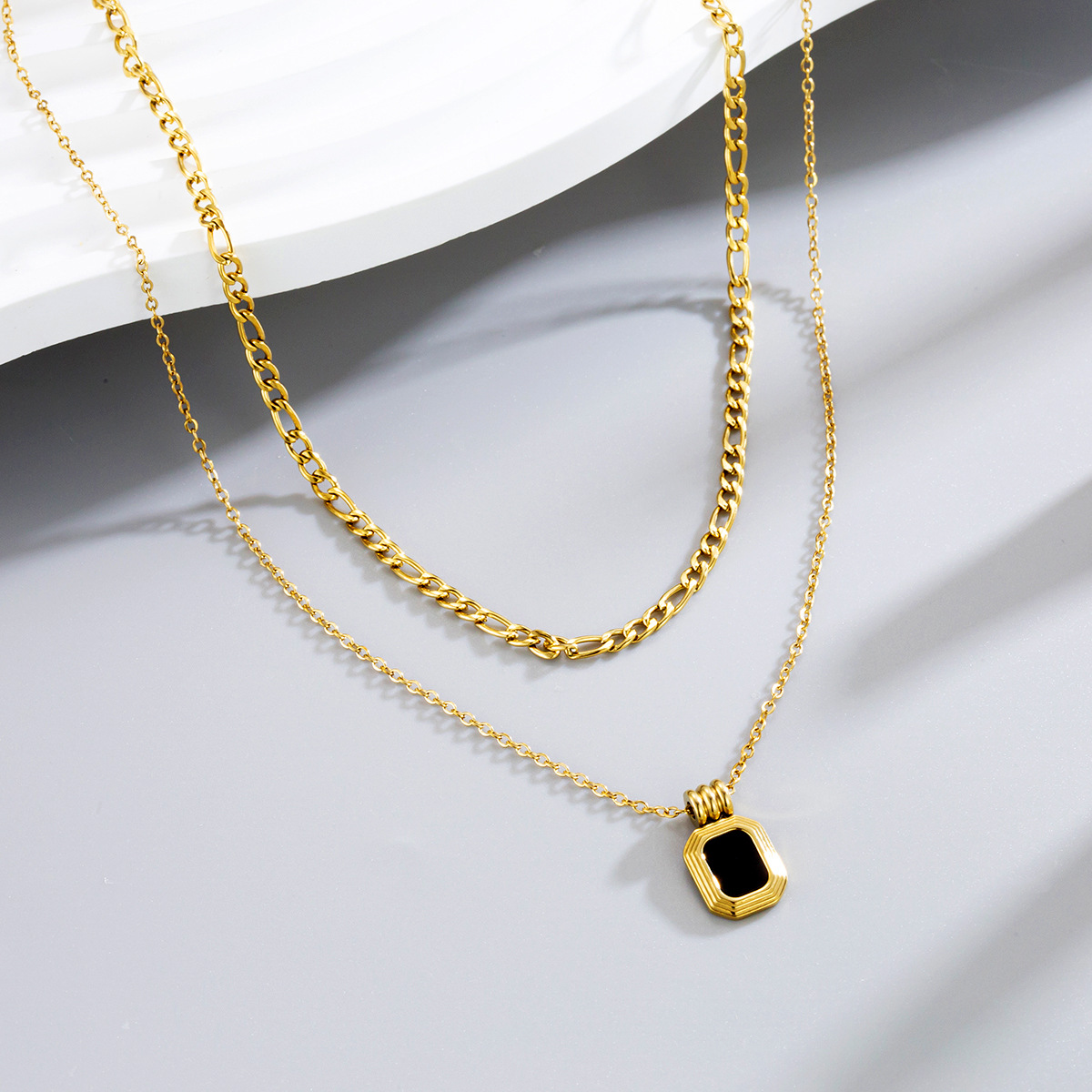
The statement jewelry opportunity: Bold pieces have higher average order values than delicate pieces. A chunky chain necklace retails for $30 to $60 (vs. $15 to $30 for a thin chain), and customers who buy statement pieces often buy complementary items to complete the look. Statement jewelry also performs exceptionally well on social media because bold, eye-catching pieces get more likes, shares, and saves. For retailers, a well-curated statement collection can increase average order value by 25 to 40% and drive significant social media traffic.
Style and Design Questions
What are the most popular statement jewelry styles right now?
The statement jewelry trend encompasses several distinct styles, each with its own customer base: (1) Chunky chain necklaces: The #1 statement style. Curb chains, rope chains, and paperclip chains in 4mm to 10mm widths. Worn alone as a centerpiece or layered with thinner chains. The "neck mess" look (3 to 6 chains of varying weights) is especially popular. (2) Oversized hoop earrings: 40mm to 80mm hoops in thick tubing. The bigger, the better for this trend. Gold hoops are classic, but silver and black hoops are growing fast. (3) Sculptural and geometric pieces: Bold, architectural designs inspired by 1980s power dressing and contemporary art. Think large angular pendants, geometric cuffs, and abstract shapes. (4) Chunky bracelets: Thick curb chain bracelets, wide bangles, and oversized chain link bracelets. Stacked on the wrist for maximum impact. (5) Bold rings: Large signet rings, wide band rings (5mm to 10mm), and oversized stone rings. Worn multiple on one hand for a "power ring" look. (6) Statement pendants: Large, eye-catching pendants (20mm to 50mm) on medium-weight chains. Crosses, initials, medallions, and abstract shapes. (7) Maxi earrings: Long, dangling, or oversized earrings that frame the face. Shoulder-dusting earrings are especially popular for evening and events. (8) Layered ear stacks: Multiple earrings in one ear, combining studs, hoops, and cuffs. This is a growing trend that drives multiple purchases per customer. For inventory, start with chunky chains (30%), oversized hoops (25%), bold rings (20%), chunky bracelets (15%), and statement pendants (10%). These five categories cover 90% of statement jewelry demand.
How do customers style chunky jewelry without looking overdone?
Styling statement jewelry is about balance and confidence. Here are the most common styling questions and answers: (1) One statement piece at a time: The golden rule is to let one piece be the star. If wearing a chunky necklace, keep earrings small or skip them. If wearing oversized hoops, wear a simple chain or no necklace. This prevents the look from being overwhelming. (2) Pair with simple clothing: Statement jewelry pops against neutral, simple outfits. A white t-shirt and jeans with a chunky gold chain is a classic, effortless look. Avoid pairing bold jewelry with busy patterns or bright colors that compete. (3) Balance proportions: A chunky necklace pairs well with a V-neck or scoop neck top that shows the collarbone. Oversized hoops pair well with pulled-back hair or an updo. Bold rings look best with short or neutral nails. (4) The "neck mess" layering technique: Start with a choker (14 inches), add a medium chain (16-18 inches), and finish with a longer pendant (20-24 inches). Mix weights: one chunky chain as the anchor, two to three thinner chains for texture. This creates a curated, intentional look rather than a jumble. (5) Day vs. night: Smaller statement pieces (4-6mm chains, 30-40mm hoops) work for daytime. Larger pieces (8mm+ chains, 60mm+ hoops) are better for evenings and events. (6) Metal mixing: Mixing gold and silver is now acceptable and even trendy. A gold chunky chain with silver hoops can look intentional and modern. (7) For retailers, include styling tips in product descriptions and social media posts. Customers who know how to style a piece are more likely to buy it and less likely to return it. "Wear with a white tee and jeans for an effortless everyday look" is more compelling than just listing specifications.
What chain width is considered "chunky" and what sells best?
Chain width is the defining characteristic of chunky jewelry, and getting the sizing right is critical: (1) 1mm to 2mm: Delicate/dainty. Not chunky. This is the minimalist range. (2) 3mm to 4mm: Light statement. The entry point for chunky. Good for customers who want a bolder look without going too extreme. Sells well for everyday wear. (3) 5mm to 6mm: Medium chunky. The most popular width for statement chains. Noticeable but not overwhelming. Works for both men and women. This is the best-selling range. (4) 7mm to 8mm: Bold statement. Definitely chunky. Great for fashion-forward customers and evening wear. Growing in popularity, especially on TikTok. (5) 9mm to 12mm: Maxi chunky. Very bold. For customers who want to make a serious statement. Niche but high-margin. (6) 12mm+: Ultra chunky. Extreme statement. Very niche, mostly for hip-hop and high-fashion customers. (7) For a retail collection, stock: 4mm (25%), 5-6mm (40%), 7-8mm (25%), 9mm+ (10%). The 5-6mm range is the workhorse that appeals to the broadest customer base. (8) Chain style matters too: Curb chains (flat, interlocking links) are the most popular for chunky looks. Rope chains (twisted, textured) are second. Paperclip chains (elongated, rectangular links) are trendy and modern. Figaro chains (patterned links) have a classic, timeless appeal. (9) Always specify chain width in millimeters in product titles and descriptions. This is a key detail that customers search for ("6mm gold chain," "8mm curb chain") and it sets accurate expectations.
Is statement jewelry just for women, or are men buying it too?
Men are a major and growing market for statement jewelry, and this is one of the biggest opportunities in the category: (1) Men's statement jewelry is growing at 10 to 12% annually, faster than the overall jewelry market. (2) Chunky chains are the #1 men's jewelry category. Cuban link chains (a variation of curb chain) in 6mm to 10mm widths are the most popular, driven by hip-hop culture and mainstream fashion acceptance. (3) Men's statement rings: Signet rings, pinky rings, and wide band rings (5mm to 8mm). Engraved signet rings are especially popular for personalization. (4) Men's bracelets: Chunky chain bracelets, leather and metal combination bracelets, and wide bangles. (5) Men's earrings: Small to medium hoops (10mm to 20mm), stud earrings, and cross earrings. Single-earring looks are trending. (6) Black IP plating is very popular in men's statement jewelry, giving an edgy, modern look that appeals to younger men. (7) The key difference in men's statement jewelry: men prefer heavier, simpler, more solid pieces. They are less likely to buy colorful stones or intricate designs. Weight and presence matter more than delicacy. (8) For retailers, a dedicated men's statement collection (even 10 to 15 SKUs) can significantly increase revenue. Men are often underserved by jewelry stores, and when they find a store that carries their style, they become loyal customers. (9) Marketing to men: Use male models in product photos, use keywords like "men's gold chain," "Cuban link necklace," "mens statement ring," and create a dedicated "Men's" category in your store.
| Category | Popular Styles | Typical Size | Retail Price | Wholesale Cost | Target |
|---|
| Chunky chain necklace | Curb, rope, paperclip | 4-8mm width, 18-24" | $25-$55 | $4-$10 | Unisex, Gen Z |
| Oversized hoops | Thick tube, textured | 40-80mm | $20-$45 | $3-$9 | Women, fashion |
| Bold rings | Signet, wide band, stone | 5-10mm width | $18-$40 | $3-$8 | Unisex, men |
| Chunky bracelets | Curb chain, bangle | 5-10mm width | $22-$50 | $4-$10 | Unisex |
| Statement pendants | Cross, medallion, initial | 20-50mm | $25-$50 | $4-$9 | Men, women |
| Maxi earrings | Long dangle, shoulder | 50-100mm length | $20-$45 | $3-$8 | Women, evening |
| Cuban link (men's) | Cuban chain, bracelet | 6-10mm width | $30-$65 | $5-$12 | Men, hip-hop |
Quality and Durability Questions
Are chunky stainless steel chains durable enough for daily wear?
Absolutely. In fact, stainless steel is one of the best materials for chunky jewelry because of its strength and durability: (1) 316L stainless steel has a tensile strength of 500 to 700 MPa, meaning a 5mm chain can support 50 to 100 pounds of force before breaking. This is far more than any normal wear situation. (2) Chunky chains are actually MORE durable than thin chains, because the links are thicker and heavier. A 6mm curb chain is very difficult to break under normal use. (3) The weak point is usually the clasp, not the chain. For chunky chains, look for suppliers who use sturdy lobster clasps or box clasps that match the chain's weight. A flimsy clasp on a heavy chain is a common quality issue. (4) PVD gold plating on stainless steel is very durable (2 to 5 years of daily wear), much more so than electroplating on brass (3 to 6 months). This means chunky gold PVD chains maintain their appearance far longer than cheap fashion jewelry. (5) Stainless steel does not tarnish, rust, or corrode. It can be worn in the shower, pool, and gym (though we recommend removing for chlorine pools and saltwater to be safe). (6) For rings, wide stainless steel bands (5mm to 10mm) are extremely durable. They will not bend, dent, or scratch easily, unlike gold or silver bands of the same width. (7) The main concern with chunky jewelry is weight, not durability. A 10mm, 24-inch chain can weigh 50 to 80 grams, which some customers find heavy or uncomfortable. Offer a range of weights and note the weight in product descriptions so customers can choose what is comfortable for them. (8) For retailers, selling chunky stainless steel jewelry means fewer returns and complaints than selling chunky gold or silver, because stainless steel is stronger and does not tarnish. It is the most practical material for bold, everyday statement pieces.
How do I check the quality of chunky jewelry before buying wholesale?
Quality inspection is especially important for statement pieces because flaws are more visible on large, bold designs. Here is what to check: (1) Link quality: Each link should be uniform in size and shape. Look for bent links, uneven soldering, or rough spots where links connect. On curb chains, the links should lie flat and smooth against each other. (2) Clasp: The clasp should be sturdy and match the chain's weight. Open and close it several times; it should operate smoothly and close securely. The jump ring connecting the clasp to the chain should be closed (soldered or tightly pressed), not open. (3) Finish: Run your finger along every surface. It should be smooth, with no sharp edges, rough spots, or casting marks. Hold it up to light and look for uneven polishing, scratches, or pitting. On chunky pieces, the finish is very visible. (4) Plating: PVD plating should be uniform in color, with no thin spots, bubbles, or discoloration. Compare the color of the chain, clasp, and any pendants; they should all match. (5) Weight: A quality chunky piece has a satisfying, substantial weight. Pieces that feel unnaturally light may be hollow or made from thinner material. (6) Stone setting (if applicable): Stones should be tight and not wiggle. Prongs should be smooth and evenly spaced. On large statement stones, check that the setting is secure and the stone is not loose. (7) Hinges and moving parts: For hoop earrings, the hinge should open and close smoothly and snap shut securely. For bracelets, any clasps or hinges should operate smoothly. (8) Always order samples before placing bulk orders. Inspect the samples carefully, wear them for a week to test durability, and if the quality is not up to standard, find another supplier. In statement jewelry, a $1 difference in cost per piece can mean a huge difference in quality, and quality is what keeps customers coming back and leaving positive reviews.
What is the difference between curb, Cuban, rope, and paperclip chains?
These are the four most popular chunky chain styles, and understanding the differences helps you stock the right mix: (1) Curb chain: Flat, interlocking links that have been twisted and flattened so they lie smooth against the skin. The most classic and versatile chunky chain. Works for both men and women, everyday and evening. Available in all widths (2mm to 12mm+). The best-selling chain style worldwide. (2) Cuban link chain: A variation of the curb chain with closely interlocking, flattened links that create a smooth, continuous, almost snake-like appearance. Cuban links are typically wider (6mm to 12mm) and heavier than standard curb chains. Very popular in men's and hip-hop jewelry. Often more expensive due to the tighter link construction. (3) Rope chain: Twisted, braided links that create a textured, rope-like appearance. Rope chains sparkle more than curb chains because the twisted surfaces catch light from multiple angles. Popular for both men and women. Available in 2mm to 10mm widths. Has a more classic, traditional look. (4) Paperclip chain: Elongated, rectangular links that resemble paperclips, connected in a chain. A modern, trendy style that has grown rapidly since 2022. Available in 3mm to 8mm widths. Has a clean, geometric, contemporary look. Popular with Gen Z and fashion-forward customers. (5) Figaro chain: A pattern of 3 small links followed by 1 elongated link, repeating. A classic Italian style. Popular in men's jewelry and as a unisex option. (6) For inventory: Curb (35%), Cuban (25%), rope (20%), paperclip (15%), figaro (5%). This mix covers the broadest customer demand. (7) Each style has a different "vibe": curb = classic, Cuban = bold/hip-hop, rope = traditional/sparkly, paperclip = modern/trendy. Understanding this helps you market each style to the right customer.
Retail and Inventory Questions
How much statement jewelry should I carry compared to minimalist pieces?
Finding the right balance between statement and minimalist inventory is key to maximizing sales while managing risk: (1) The current market split is roughly 60% minimalist/everyday and 40% statement/bold. This is a good starting point for most retailers. (2) If your customer base is younger (Gen Z, under 30), shift toward 50% statement, 50% minimalist. Younger customers buy more bold, expressive pieces. (3) If your customer base is older (35+, professional), shift toward 70% minimalist, 30% statement. Older customers tend to prefer classic, understated pieces, though they may buy statement pieces for special occasions. (4) If your store is primarily online with strong social media presence, shift toward 50% statement. Statement pieces perform better on Instagram and TikTok because they are more visually striking. (5) If your store is a physical boutique in a conservative area, shift toward 70% minimalist, 30% statement. (6) Within the statement category, start small: 10 to 15 SKUs covering the top styles (chunky chains, oversized hoops, bold rings). Test what sells in your market, then expand the winners. (7) Statement pieces have higher price points ($25 to $65) and higher margins, so even a 30% statement allocation can contribute 40 to 50% of revenue. (8) Seasonal adjustment: Statement jewelry sells better in fall and winter (holiday parties, events, layering with sweaters). Minimalist sells more consistently year-round. Increase statement inventory by 10 to 15% in September through December. (9) The key is to monitor sell-through rates for each category and adjust. If statement pieces are selling out in 2 weeks, order more. If they are sitting for 2 months, reduce the allocation. Data, not guesswork, should drive your inventory mix.
How do I market statement jewelry effectively?
Statement jewelry is inherently visual and social-media-friendly, which makes marketing it both easier and more important: (1) Video content is essential. Statement jewelry looks best in motion. Short videos (TikTok, Instagram Reels) showing the piece being worn, the chain's movement, the sparkle, and how it transforms an outfit get far more engagement than static photos. (2) "Get ready with me" and "outfit of the day" content: Show how a single chunky chain elevates a simple outfit. This demonstrates the transformative power of statement jewelry and gives customers styling ideas. (3) Before-and-after: Show an outfit without jewelry and then with a statement piece. The difference is dramatic and compelling. (4) Influencer partnerships: Work with fashion and lifestyle influencers who have bold, expressive personal styles. Send them statement pieces to wear in their content. Micro-influencers (10K to 50K followers) in the fashion niche often have better engagement rates than macro-influencers. (5) User-generated content: Encourage customers to post photos wearing your jewelry with a branded hashtag. Repost the best content. UGC is more trusted than brand-created content and provides social proof. (6) SEO keywords: "chunky gold necklace," "oversized hoop earrings," "bold statement ring," "thick chain necklace," "Cuban link chain," "statement jewelry." These are high-intent search terms with growing volume. (7) Gift marketing: Statement jewelry makes a great gift because it feels special and luxurious. Market for birthdays, anniversaries, Valentine's Day, and holidays. Emphasize the "wow factor" of receiving a bold piece. (8) The emotional hook: Statement jewelry is about confidence and self-expression. "Wear it like you mean it," "Make a statement without saying a word," "Bold jewelry for bold women." These emotional messages resonate more than feature descriptions. (9) Consistency matters. Post 3 to 5 times per week on social media, mix product shots with lifestyle content, and engage with your audience. Statement jewelry brands that are consistent on social media grow faster than those that post sporadically.
What are the most common returns and complaints for statement jewelry?
Understanding common issues helps you prevent them and handle them when they occur: (1) "It's heavier than I expected": This is the #1 complaint for chunky jewelry. Prevention: Include the weight in grams in product descriptions and note that chunky pieces have substantial weight. Offer lighter alternatives for customers who prefer comfort. (2) "It's bigger/smaller than I expected": Size perception is hard from photos. Prevention: Include a photo with a common object (coin, ruler) for scale, and specify all dimensions (chain width in mm, hoop diameter in mm, ring width in mm). Model shots also help with scale. (3) "Clasp broke": The clasp is the weak point on heavy chains. Prevention: Source from suppliers with quality clasps. Include a note about proper clasp care. Offer free replacement clasps for customers who experience issues. (4) "Turned my skin green": This happens with cheap alloy jewelry, not stainless steel. If you sell stainless steel, this should not be an issue. If a customer reports it, check that the piece is actually stainless steel (some suppliers mislabel). (5) "Plating faded": PVD plating should last 2 to 5 years. If it fades quickly, it may be electroplating instead of PVD. Source from reputable suppliers who use genuine PVD plating. (6) "Chain tangled": Chunky chains can tangle if stored improperly. Include care instructions: "Store separately in a jewelry box or pouch to prevent tangling." (7) "Not hypoallergenic": 316L stainless steel is hypoallergenic, but some customers with extreme sensitivity may still react. Disclose materials clearly and offer titanium alternatives for sensitive customers. (8) Handling returns: Accept returns within 30 days for unworn items. For defective items (broken clasp, plating issue), offer free replacement or full refund without requiring return. This builds goodwill and generates positive reviews. (9) Track return reasons. If multiple customers return the same item for the same reason (e.g., "too heavy"), improve the product description or find a lighter alternative. Continuous improvement based on return data reduces future returns.
- Top styles: Chunky chains (35%), oversized hoops (25%), bold rings (20%), chunky bracelets (15%), pendants (5%).
- Best-selling chain width: 5-6mm is the sweet spot. Stock 4mm (25%), 5-6mm (40%), 7-8mm (25%), 9mm+ (10%).
- Men's market: Fastest growing segment (+10-12%). Cuban links 6-10mm, signet rings, black IP plating.
- Inventory mix: 60% minimalist, 40% statement. Shift to 50/50 for young/social-media-heavy stores.
- Stainless steel advantage: Strong enough for chunky designs, no tarnish, PVD lasts 2-5 years. Better than brass/gold-plated.
- Quality checks: Uniform links, sturdy clasp matching chain weight, smooth finish, uniform PVD color, substantial weight.
- Marketing: Video content, outfit transformations, micro-influencers, UGC, emotional hooks about confidence.
- Top complaint: "Heavier than expected." Include weight in grams and scale photos. Specify all dimensions in mm.
Final Statement Jewelry Advice
Statement jewelry is more than a passing trend; it is a fundamental shift in how people think about accessories. After years of minimalism, customers are ready to express themselves boldly, and jewelry is one of the easiest ways to do it. A single chunky chain or pair of oversized hoops can transform a basic outfit into a look.
For retailers, the opportunity is clear. Statement pieces have higher price points, higher margins, and stronger social media performance than delicate pieces. They appeal to both women and men, and they work for everyday wear and special occasions. Stainless steel makes statement jewelry accessible: the bold look of heavy gold without the heavy price tag, and the durability to last for years.
Start with a curated selection of the strongest styles (chunky chains, oversized hoops, bold rings), photograph them on models, market them with video content, and listen to customer feedback. The statement jewelry customer is confident, expressive, and loyal to brands that understand their style. Serve them well, and they will come back for more.
Related Reading
- Minimalist and Dainty Jewelry FAQ: Everyday Wear, Layering, and Quality — Everyday Wear, Layering, Quality, Sizing, and Wholesale Buying
- Cuban Link Chain FAQ: Widths, Styles, Gold vs Steel, and Wholesale Guide — Styles, Widths, Lengths, Miami vs Cuban, Gold vs Steel, and Wholesale Buying Guide
- Stainless Steel Necklaces FAQ: Chains, Pendants, Layering, and Sizing — Chains, Pendants, Layering, and Sizing
- Layered and Stacked Jewelry Styling FAQ: Necklaces, Rings, and Mixed Metals — Necklace Layering, Ring Stacking, Mixing Metals, and Curated Looks
Curb · Cuban · Rope · Paperclip · Low MOQ $150
Request Bold Collection SamplesFactory-Direct Since 1998 · 316L Stainless · PVD Gold Finish