Stainless Steel Jewelry Materials FAQ
316L, PVD Gold, and Hypoallergenic Explained
Understanding What You're Really Buying
Walk into any jewelry store or browse any online shop, and you'll see terms like "316L stainless steel," "PVD gold," "IP plating," "hypoallergenic," and "titanium steel." Most customers don't know what these terms mean, and many retailers don't either. But understanding the materials is the difference between selling jewelry that lasts for years and selling jewelry that falls apart in months.
In this guide, we answer the most common questions about stainless steel jewelry materials. We'll explain what 316L really means, how PVD plating works, why stainless steel is hypoallergenic, and how it compares to other popular jewelry metals. No chemistry degree required, just straightforward explanations based on 25 years of manufacturing experience.
Whether you're a consumer trying to make an informed purchase or a retailer who needs to answer customer questions with confidence, this guide will give you the knowledge you need.
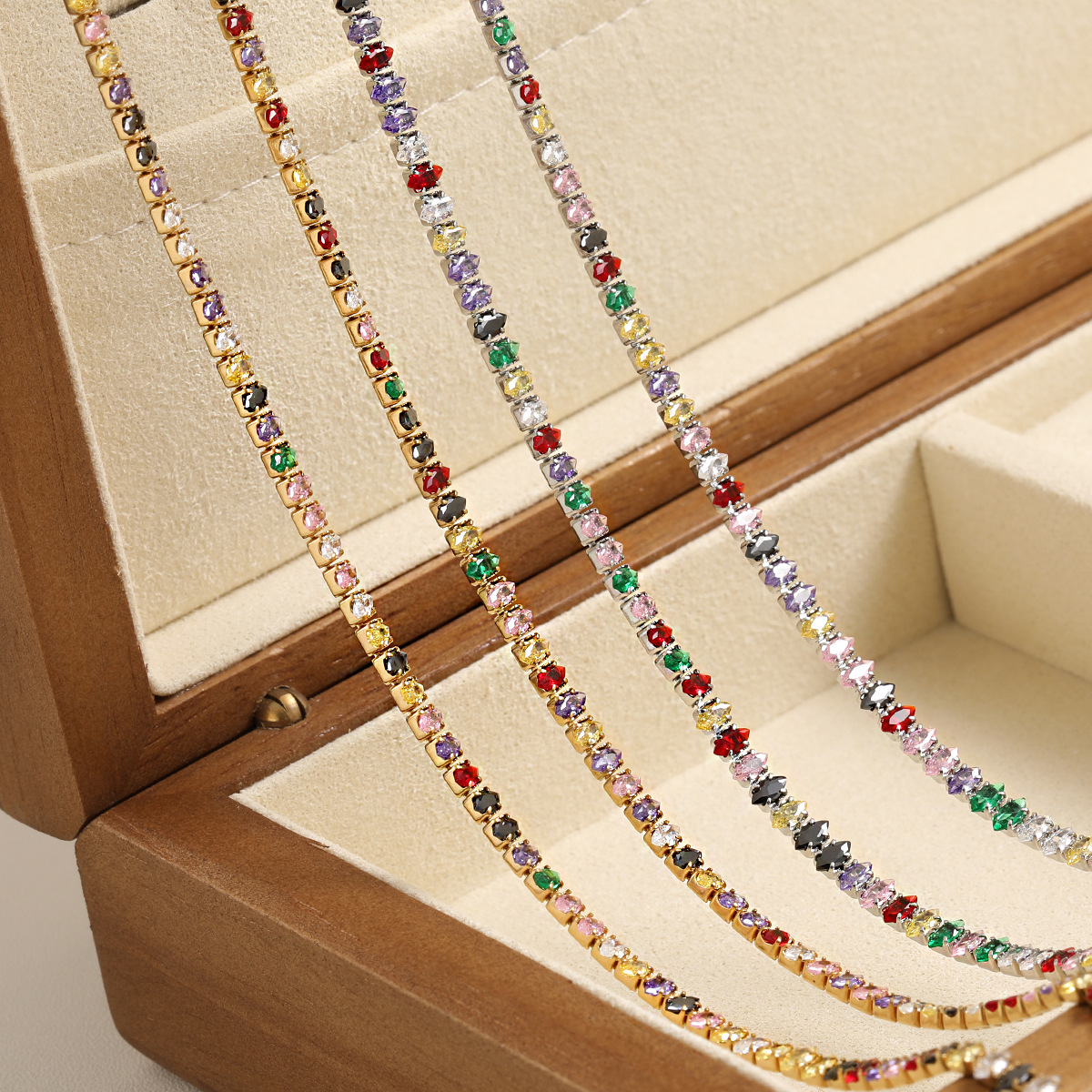
The bottom line: Not all stainless steel jewelry is created equal. 316L surgical-grade stainless steel with PVD plating is the gold standard for quality fashion jewelry. If a supplier can't tell you what grade of stainless steel they use or what plating method they employ, that's a red flag. Always ask, and always buy from suppliers who are transparent about their materials.
Stainless Steel Grades
What does 316L mean, and why does it matter?
316L is a specific grade of stainless steel, and it's the best grade for jewelry. The numbers refer to the chemical composition. 316L contains about 16-18% chromium, 10-14% nickel, and 2-3% molybdenum. The "L" stands for "low carbon," which means it has less than 0.03% carbon. The chromium creates a protective oxide layer on the surface that prevents rust and corrosion. The molybdenum adds extra corrosion resistance, especially against saltwater and chemicals. The low carbon content makes the metal easier to work with and more resistant to corrosion after welding or shaping. This is the same material used in surgical instruments, medical implants, and marine equipment. If a piece of jewelry is made from 316L, you can be confident it's high quality.
What's the difference between 316L and 304 stainless steel?
304 stainless steel is the most common grade of stainless steel, used in everything from kitchen appliances to cutlery. It contains 18-20% chromium and 8-10.5% nickel, but no molybdenum. 316L has molybdenum, which gives it better corrosion resistance, especially against saltwater, chlorine, and certain chemicals. For jewelry, both grades are acceptable, but 316L is more durable and more resistant to corrosion from sweat and everyday exposure. 304 is slightly cheaper, which is why some manufacturers use it. If you're choosing between the two, 316L is always the better choice for jewelry that will be worn regularly, especially in humid climates or for people who sweat heavily.
What is 201 stainless steel, and why should I avoid it?
201 stainless steel is a cheaper grade that was developed as a lower-cost alternative to 304. It replaces some of the nickel with manganese and nitrogen, which lowers the cost but also reduces corrosion resistance. 201 contains about 16-18% chromium but only 3.5-5.5% nickel, with 5.5-7.5% manganese. The lower nickel content means it's more prone to corrosion, especially in humid environments or with exposure to sweat. Some people also report skin reactions to 201 stainless steel, likely because the lower corrosion resistance allows more metal ions to leach out. 201 jewelry is significantly cheaper, but it won't last as long and may cause skin irritation. For quality jewelry, always choose 316L or at least 304.
What is "titanium steel" or "titanium stainless steel"?
Here's the truth: "titanium steel" is usually a marketing term, not a real material. In most cases, "titanium steel" jewelry is actually 316L stainless steel with a black PVD coating that gives it a dark, titanium-like appearance. Some manufacturers use the term because "titanium" sounds more premium and hypoallergenic. Real titanium jewelry is made from pure titanium (grade 1, 2, or 5) and is significantly more expensive than stainless steel. If a piece is labeled "titanium steel" and priced like stainless steel, it's almost certainly stainless steel with a dark finish. There's nothing wrong with that, but it's important to know what you're actually buying. At Showfay, we're transparent: our jewelry is 316L stainless steel, and we call it that.
| Grade | Chromium | Nickel | Molybdenum | Corrosion Resistance | Jewelry Quality |
|---|
| 316L | 16-18% | 10-14% | 2-3% | Excellent | Best |
| 304 | 18-20% | 8-10.5% | None | Good | Good |
| 201 | 16-18% | 3.5-5.5% | None | Fair | Budget |
| Titanium (pure) | None | None | None | Excellent | Premium |
Plating and Finishes
What is PVD plating, and how is it different from regular plating?
PVD stands for Physical Vapor Deposition. It's a vacuum-based process where the plating material (gold, rose gold, black, etc.) is vaporized in a high-temperature vacuum chamber and then deposited onto the stainless steel surface one molecule at a time. This creates a bond that's molecular, meaning the plating is literally fused to the surface of the metal. Traditional electroplating uses an electrical current to deposit metal ions from a solution onto the surface. PVD creates a much harder, more durable bond that's 5-10 times more resistant to wear, chipping, and fading. PVD plating is also more environmentally friendly, as it doesn't use toxic chemicals like cyanide. The downside is that PVD equipment is expensive, so PVD-plated jewelry costs more to produce. But the durability makes it worth every penny.
What is IP plating, and is it the same as PVD?
IP stands for Ion Plating, and it's essentially the same thing as PVD. IP is a type of PVD process that uses ionized gas to accelerate the plating particles onto the surface. The terms are often used interchangeably in the jewelry industry. Both PVD and IP plating create a durable, long-lasting finish that's far superior to traditional electroplating. If you see "IP gold" or "PVD gold" on a product listing, they're referring to the same type of high-quality vacuum plating. The key thing to look for is that it's vacuum-plated rather than electroplated. If a listing just says "gold plated" without specifying PVD or IP, it's likely traditional electroplating, which will wear off much faster.
How thick is PVD gold plating, and does thickness matter?
PVD gold plating is typically 0.5 to 1 micron thick (that's 0.0005 to 0.001 millimeters). This might sound incredibly thin, and it is, but because PVD bonds at the molecular level, even a thin coating is extremely durable. Traditional gold plating is often 1-3 microns thick but wears off faster because it doesn't bond as strongly. With PVD, the quality of the bond matters more than the thickness. A 0.5 micron PVD coating will outlast a 3 micron electroplated coating. That said, some premium PVD processes go up to 2-3 microns for even greater durability. For everyday jewelry, 0.5-1 micron PVD is more than sufficient and will last 3-5 years or more with regular wear.
What finishes are available for stainless steel jewelry?
Stainless steel jewelry comes in several finishes. Polished stainless steel has a bright, mirror-like shine similar to silver or white gold. Brushed stainless steel has a matte, satin-like finish created by brushing the surface with an abrasive material. Black IP or PVD gives a deep, uniform black color. PVD gold gives a rich, warm gold color identical in appearance to solid gold. PVD rose gold gives a pinkish-gold hue. Two-tone finishes combine two colors, usually gold and steel or gold and rose gold. Each finish has its own aesthetic, and the choice depends on personal preference and the style of the piece. Polished and PVD gold are the most popular, accounting for about 70% of sales combined.

Hypoallergenic and Skin Sensitivity
Is stainless steel really hypoallergenic?
Yes, 316L stainless steel is genuinely hypoallergenic, and here's why. The most common jewelry allergy is to nickel, affecting about 10-15% of the population. While 316L stainless steel does contain nickel (10-14%), the nickel is locked into the metal's crystalline structure and doesn't leach out in normal wear. The chromium oxide layer on the surface acts as a barrier, preventing nickel ions from reaching the skin. This is why 316L is used for surgical implants and medical equipment, it's designed to be biocompatible. Studies have shown that 316L stainless steel releases negligible amounts of nickel, far below the threshold that causes allergic reactions. For the vast majority of people with nickel allergies, 316L stainless steel is completely safe. The only exception is people with extremely severe nickel allergies, who may need pure titanium, but this is less than 1% of the population.
Why do some people still react to stainless steel jewelry?
If someone reacts to a piece of "stainless steel" jewelry, it's usually for one of three reasons. First, the jewelry might not actually be 316L. Cheap 201 stainless steel has lower corrosion resistance and can release more metal ions, including nickel and manganese, which can cause reactions. Second, the jewelry might have a poor-quality plating that wears through quickly, exposing base metals underneath. Some cheap "stainless steel" jewelry is actually brass or zinc alloy with a thin stainless steel coating. Third, the reaction might not be to the metal at all, but to something else, such as soap residue, lotion, or even friction from a tight-fitting ring. If a customer reports a reaction, ask them what grade of stainless steel the piece is and where they bought it. In most cases, it's not genuine 316L.
How does stainless steel compare to other hypoallergenic metals?
The most hypoallergenic jewelry metals are pure titanium, niobium, platinum, and solid 18k+ gold. 316L stainless steel is in the next tier, and for most people, it's just as hypoallergenic as the more expensive options. The advantage of stainless steel is cost, it's a fraction of the price of titanium or platinum, while offering similar hypoallergenic properties. Sterling silver (925) contains 7.5% copper and can cause reactions in some people, plus it tarnishes. Brass and copper jewelry often contains lead and nickel and is the most likely to cause reactions. For customers with sensitive skin who want an affordable option, 316L stainless steel is the best choice. It's the material we recommend most often for first-time jewelry buyers and people with known sensitivities.
Can PVD gold plating cause allergic reactions?
PVD gold plating itself is made from real gold particles and is generally safe for sensitive skin. The gold used in PVD is typically 18k or 24k, which has very low nickel content. Because the PVD process creates a molecular bond, there's no need for nickel "flash" plating that's sometimes used in traditional electroplating to improve adhesion. This means PVD gold jewelry is less likely to cause reactions than traditionally gold-plated jewelry. However, if the PVD coating wears through completely, the underlying 316L stainless steel is still hypoallergenic, so there's no point where the jewelry suddenly becomes unsafe. This is a big advantage over gold-plated brass, where the brass underneath can cause reactions once the plating wears off.
- 316L is the best grade: Surgical-grade, molybdenum-enhanced, maximum corrosion resistance.
- Avoid 201: Cheaper, less corrosion-resistant, more likely to cause skin reactions.
- PVD beats electroplating: 5-10x more durable, molecular bond, no chipping.
- Hypoallergenic is real: Nickel is locked in, chromium oxide barrier prevents leaching.
- "Titanium steel" is marketing: Usually 316L with black PVD coating. Know what you're buying.
- Ask your supplier: If they can't tell you the grade or plating method, walk away.
Material Comparison
Stainless steel vs. sterling silver: which is better?
It depends on your priorities. Sterling silver (925) has a brighter, whiter luster that many people prefer, and it's a precious metal with intrinsic value. However, silver tarnishes, requires regular polishing, is softer and more prone to scratches and dents, and can cause skin reactions in some people due to the 7.5% copper content. Stainless steel has a slightly darker, more gunmetal-gray appearance, doesn't tarnish, is much harder and more durable, and is hypoallergenic. Stainless steel is also significantly cheaper. For everyday wear, especially for active people or those with sensitive skin, stainless steel is the more practical choice. For special occasions or for customers who want the prestige of a precious metal, silver is the way to go. Many successful retailers carry both, positioning stainless steel as the everyday option and silver as the premium option.
Stainless steel vs. titanium: which should I choose?
Titanium is slightly more hypoallergenic than stainless steel (it contains zero nickel) and is about 40% lighter. It's also more expensive, typically 2-3 times the cost of comparable stainless steel pieces. Titanium is more difficult to manufacture, which limits the range of styles available, you'll find fewer intricate designs in titanium. Stainless steel offers a much wider variety of styles, finishes, and price points, and for 99% of people, it's just as hypoallergenic. If you have a severe nickel allergy (confirmed by a dermatologist), titanium is the safer choice. For everyone else, stainless steel offers better value and more style options. We recommend stainless steel for most customers and reserve titanium for those with documented severe allergies.
Stainless steel vs. solid gold: is stainless steel a good alternative?
Stainless steel with PVD gold plating is an excellent alternative to solid gold for several reasons. First, the appearance is nearly identical, most people can't tell the difference between PVD gold on stainless steel and solid gold just by looking. Second, the cost is a fraction, a PVD gold necklace might cost $5 wholesale, while a comparable solid gold necklace would cost $200+. Third, stainless steel is more durable, solid gold is soft and scratches easily, while stainless steel is hard and scratch-resistant. The main advantage of solid gold is intrinsic value (gold is a commodity) and prestige. For everyday fashion jewelry, PVD gold stainless steel is the smarter choice for both retailers and consumers. It gives the look of gold at a price point that allows for healthy margins and repeat purchases.
| Material | Hypoallergenic | Tarnish | Durability | Cost | Best For |
|---|
| 316L Stainless | Yes | No | Excellent | Low | Everyday wear, sensitive skin |
| Sterling Silver | Mostly | Yes | Good | Medium | Special occasions, precious metal |
| Titanium | Yes (highest) | No | Excellent | High | Severe allergies, lightweight |
| Solid Gold (14k+) | Yes | No | Fair (soft) | Very High | Fine jewelry, investment |
| Brass / Copper | No | Yes | Fair | Very Low | Budget fashion (short-term) |
Final Thoughts on Materials
Understanding jewelry materials doesn't require a chemistry degree. It just requires knowing a few key facts: 316L is the best grade of stainless steel, PVD plating is far more durable than traditional plating, and stainless steel is genuinely hypoallergenic for almost everyone. Armed with this knowledge, you can make informed buying decisions and answer customer questions with confidence.
For retailers, being able to explain these materials to customers is a powerful sales tool. A customer who understands why 316L stainless steel with PVD gold is worth more than a cheap "gold-toned" piece from a fast-fashion retailer is a customer who will pay your prices and come back for more. Knowledge builds trust, and trust builds repeat business.
If you have more questions about materials, grades, or plating, don't hesitate to ask. We've been manufacturing stainless steel jewelry for 25 years, and we're happy to share what we know.
Related Reading
- Stainless Steel Jewelry FAQ: Answers to Your Most Common Questions — Answers to Your Most Common Questions
- Gold-Filled vs Gold-Plated vs Solid Gold FAQ: Differences and Durability — Understanding the Differences, Durability, Pricing, and What to Stock
- Hypoallergenic Jewelry and Sensitive Skin FAQ: Nickel, 316L, and Titanium — Nickel Allergies, 316L vs Titanium, Skin Reactions, and What Really Works
- PVD Gold Plating FAQ: Durability, Care, IP Black, and Wholesale Buying — Physical Vapor Deposition, Durability, Care, IP Black, and Wholesale Buying
Surgical-Grade Stainless · PVD Plating · Low MOQ $150
Request SamplesFactory-Direct Since 1998 · 31,000+ Styles · Quality Guaranteed